05 Jan 2026 • Reading Time: 3 min
Investing in a custom gun safe or cabinet is a significant decision that goes far beyond choosing a lock and a color. It’s about creating a highly personalized security solution that integrates seamlessly with your home, protects your investment, and ensures rapid access when seconds count.
Before you finalize that custom order, there are five critical areas you must assess. Skipping any one of these steps could leave you with a beautiful piece of furniture that doesn’t meet your primary needs for safety, access, or long-term preservation.
1. Define the Primary Function: Security vs. Access vs. Display
The single most important factor that dictates your design is the cabinet’s primary role. Is it a high-security vault, a rapid-access home defense solution, or a display piece for a collection?
- Priority: Maximum Security (The Vault): If the goal is to store high-value, heirloom, or large collections in a secure, fire-rated environment, you’ll focus on the heaviest steel gauge (7-gauge or lower), thick doors, and multi-layer fireboard insulation. You will likely sacrifice rapid access speed for impenetrable protection.
- Priority: Rapid Access (Home Defense): For firearms you need to reach immediately in an emergency, customization should focus on speed. This means high-reliability biometric or RFID locks, placement in high-traffic areas (often via concealment furniture), and an interior layout that keeps the ready-firearm immediately visible and accessible.
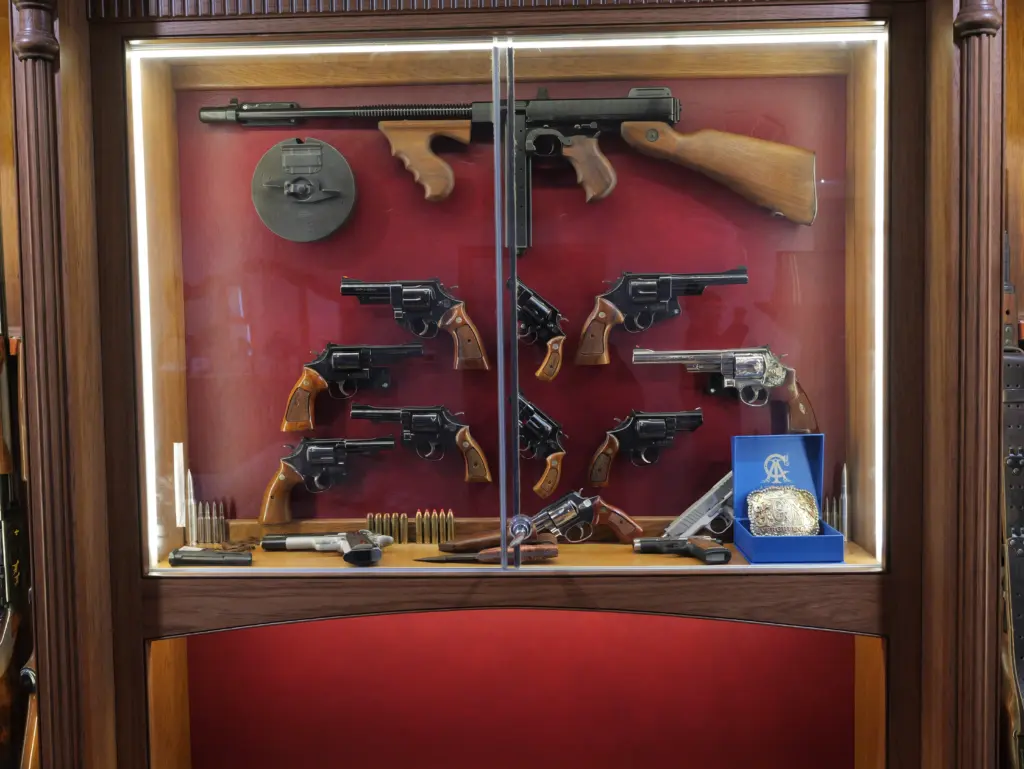
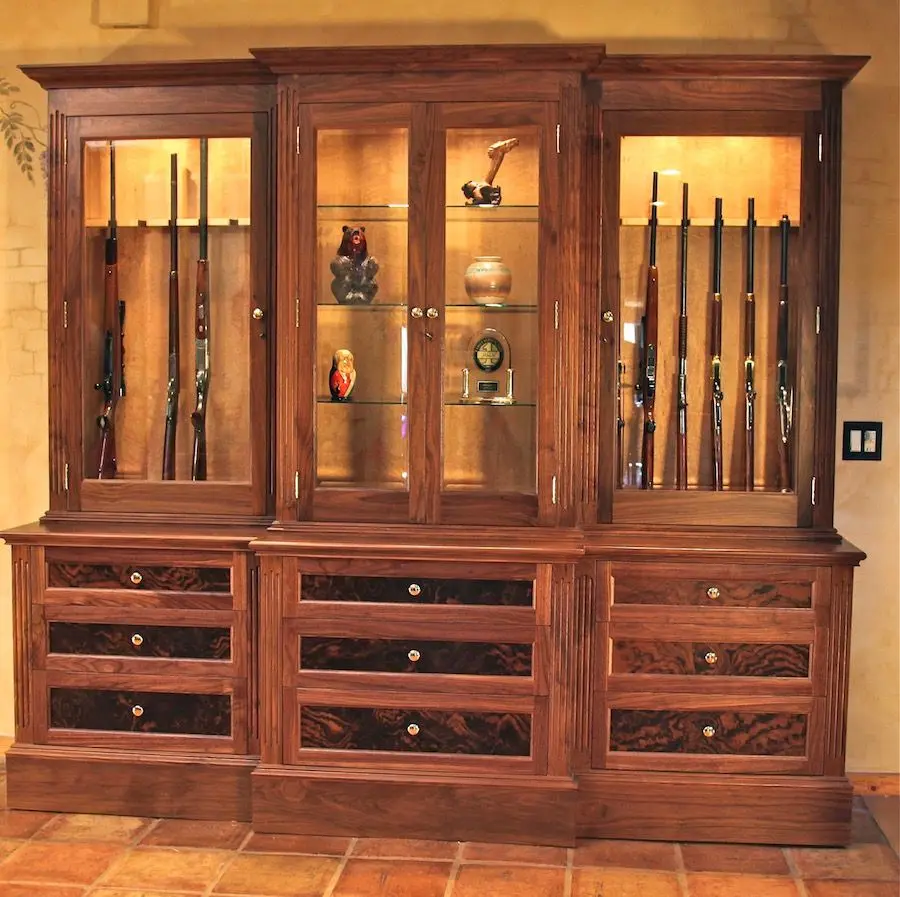
- Priority: Display (The Showpiece): If the cabinet or room is designed to showcase a collection (especially in a dedicated gun room), the budget shifts toward luxury millwork, internal lighting, climate control, and glass displays (with appropriate locking mechanisms to meet safety mandates).
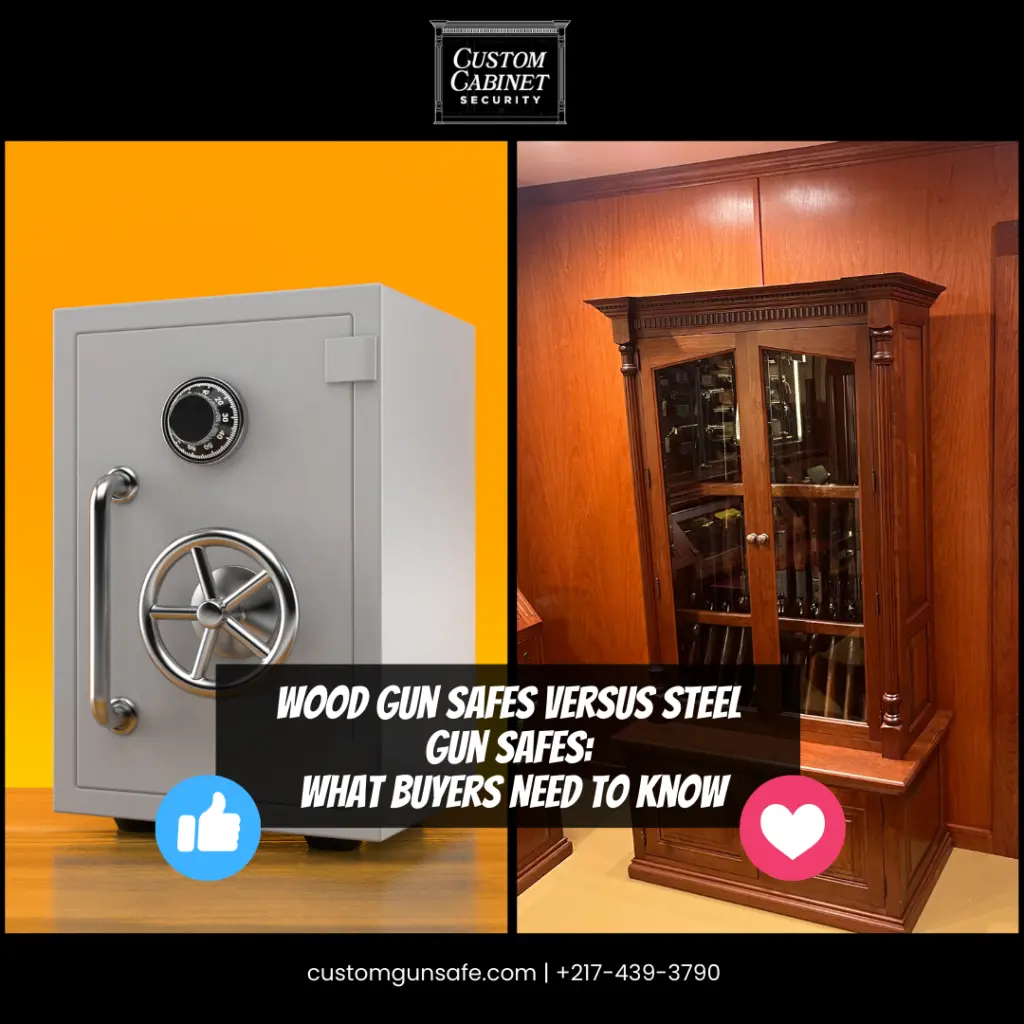
2. Master the Environment and Location
Where the cabinet lives is just as important as how it’s built.
- Climate Control (Preservation): If the cabinet is going into a garage, basement, or any area prone to humidity, internal climate control (dehumidifiers and heating rods) is non-negotiable. Custom designs should integrate these features seamlessly to prevent rust, wood warping, and damage to optics. For large gun rooms, this extends to whole-room climate control.
- Installation Logistics (Modular vs. Welded): A traditional, fully welded safe is a beast to move. If your chosen location is upstairs, in a tight closet, or in a basement with narrow staircases, you must specify a modular, break-down safe. These are shipped in panels and assembled in place, making installation possible in almost any location.
- Aesthetic Integration (Concealment): For hidden solutions (nightstands, wall shelves), the finish, stain, and style must flawlessly match your existing furniture. A custom order allows you to match wood species and stain colors precisely, ensuring the concealment piece is truly discreet.
3. Plan for Interior Flexibility and Future Growth
The biggest regret among gun safe owners is not buying a safe large enough. When ordering a custom design, factor in 1.5 to 2 times your current inventory capacity.
- Modular Racking Systems: Insist on a tool-free, adjustable interior. Modern systems use louvered or grid panels (such as CradleGrid) and adjustable stock bases. This lets you reconfigure the storage layout quickly to accommodate new guns, optics, scopes, or gear without needing tools or permanent adjustments.
- Accessory Storage: Customization should include dedicated, soft-lined drawers for handguns, shelves for ammunition, and organizational solutions for scopes, cleaning kits, and important documents. Don’t just plan for the guns; plan for the gear that goes with them.
4. Choose Your Technology Wisely
The lock and security technology are the weakest link if not chosen correctly.
- Locking Mechanism: Decide between a mechanical dial lock (highly reliable, no battery, but slow access), an electronic key lock (fast, reliable, requires battery replacement), or a biometric lock (fastest access, most convenient, but potentially most complex).
- Smart Alerts: Consider integrating sensors that monitor humidity, temperature, and unauthorized movements. This is a crucial feature for collections, as environmental damage can often be more costly than theft.
5. Set Your Budget and Certifications
Custom work comes at a premium, so set realistic expectations regarding cost and security ratings.
- Security Ratings: Look for certifications like the UL Residential Security Container (RSC) rating at a minimum. For heavy-duty protection, look for higher security ratings (TL-15 or TL-30). Your custom build should meet or exceed these industry benchmarks.
- Fire Rating: A fire rating is measured by time and temperature (e.g., “90 minutes at $1200^\circ F$”). Ensure the fire protection offered is sufficient for the value and replacement time of your collection.
Ordering a custom gun safe is a partnership between you and the builder. By thoroughly answering these five questions, you ensure the final product is a perfect fusion of top-tier security, utility, and design.
Related Posts
View All
Uncategorized
Reading Time: 12 min
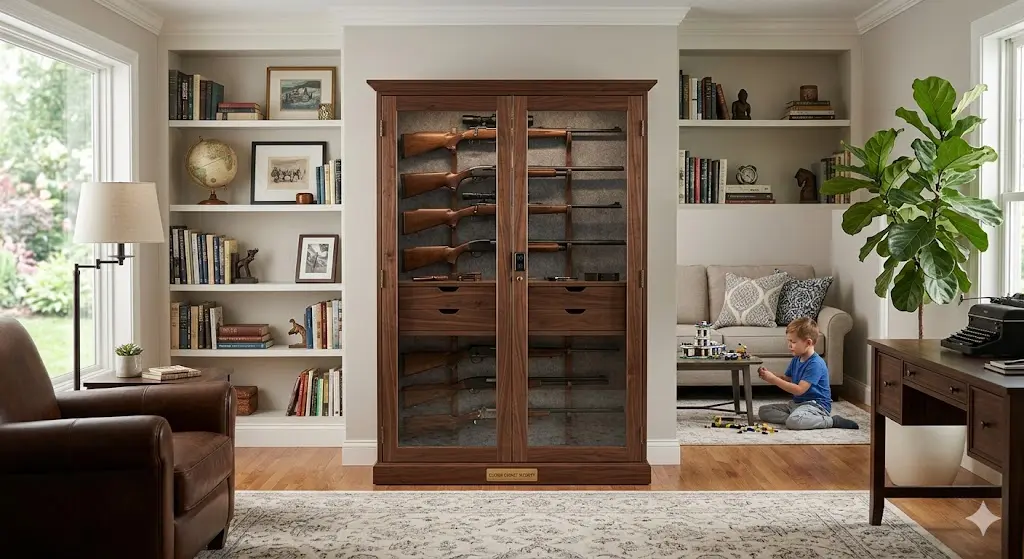
How to Childproof Your Gun Storage Without Sacrificing Display or Quick Access
Key Takeaways A note on this topic: Child gun safety is a serious subject that deserves honest, specific treatment rather
Read More
Uncategorized
Reading Time: 12 min
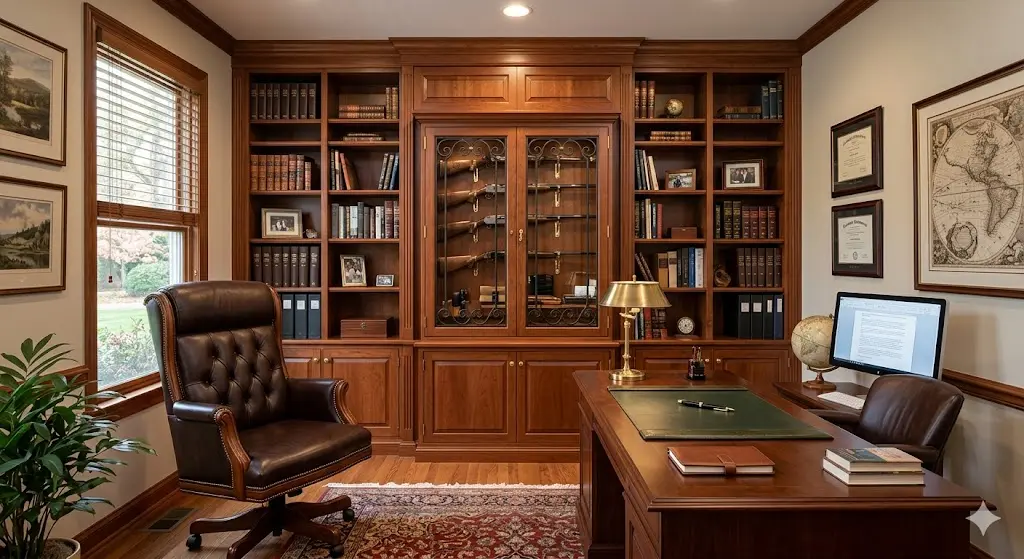
Gun Safes for Home Offices and Studies: How to Blend Security Into a Professional Space
Key Takeaways The Problem With the Standard Approach Most gun owners who have a dedicated home office or study eventually
Read More
Uncategorized
Reading Time: 10 min
What the Custom Order Process Actually Looks Like: From Consultation to Delivery of Your Amish Gun Cabinet
Key Takeaways The Uncertainty Most Buyers Feel Before They Reach Out A significant number of people who spend time on
Read More
