13 Jan 2026 • Reading Time:3min
How Secure are Wood Gun Safes and What Features Matter
When investing in a custom wood gun safe, it is vital to distinguish between a decorative cabinet and a secure storage solution. While wood cannot match the raw tensile strength of a UL-rated steel safe, a well-engineered wood safe can provide significant protection against children, curious guests, and the common “smash-and-grab” thief.
To maximize the security of a wood unit, the following features are non-negotiable.
1. The Reality of Wood Safe Security
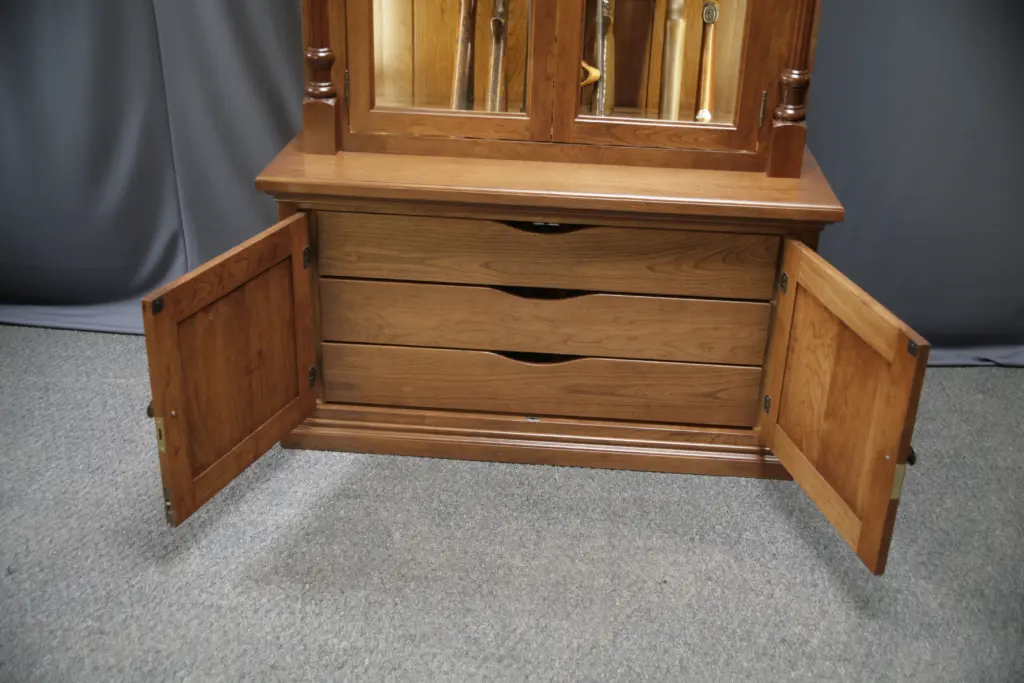
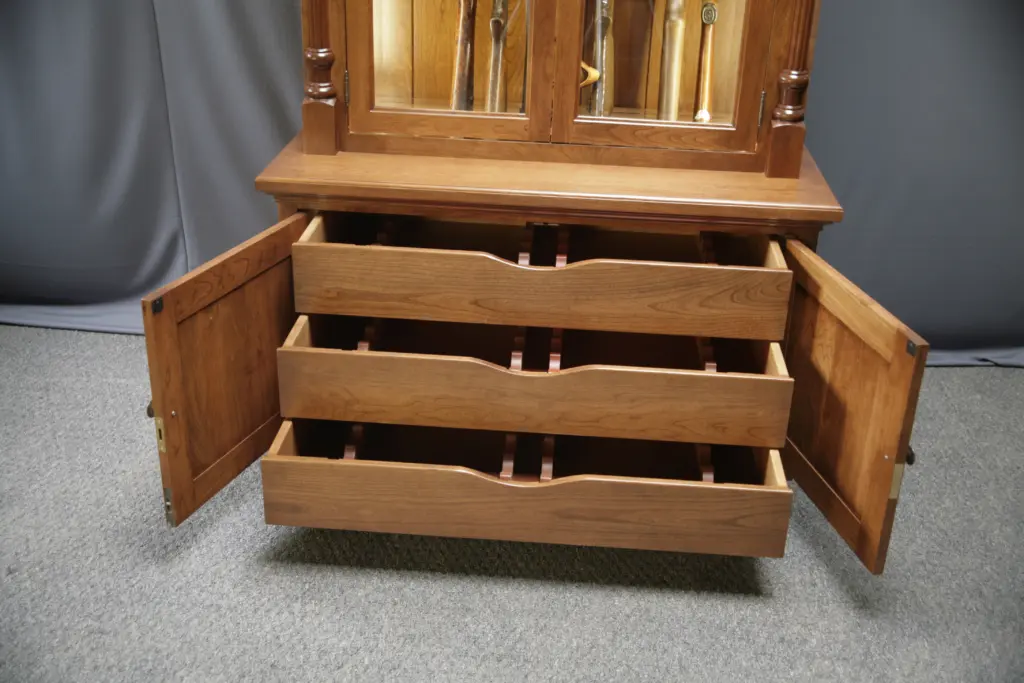
The primary security role of a wood safe is unauthorized access prevention rather than high-level burglary resistance.
- Tamper Resistance: A solid hardwood safe effectively keeps children and untrained individuals away from firearms.
- Theft Deterrence: A wood safe is a “time-delay” device. In a typical 5–8 minute burglary, a locked, solid-wood cabinet creates enough of a barrier to deter a thief looking for easy, exposed targets.
- The Glass Weakness: Most traditional wood cabinets use glass. To be “secure,” you must specify tempered safety glass or, ideally, shatter-resistant polycarbonate (Lexan), which is nearly impossible to break with common household tools.
2. Essential Security Features for Wood Safes
If you are commissioning a custom wood safe, ensure these security upgrades are included to elevate it beyond simple furniture.
Solid Hardwood Construction
The “safe” is only as strong as its walls. Specify solid 1-inch or 1.25-inch thick hardwoods (Oak, Maple, or Hickory). Avoid “veneered” products or thin 1/2-inch panels which can be easily kicked in or bypassed with a simple hand tool.
Integrated Steel Lining (The Hybrid Approach)
The most secure wood safes are actually hybrids. You can request a 14-gauge or 12-gauge steel inner liner to be built inside the wood cabinet. This gives you:
- The aesthetic beauty of an Amish-crafted wood exterior.
- The pry and drill resistance of a steel safe interior.
High-Security Locking Mechanisms
Standard “cabinet” locks are easily picked or forced. For a secure wood safe, specify:
- Three-Point Locking Systems: Instead of a single latch in the center, a three-point system locks the door at the top, middle, and bottom simultaneously, making it significantly harder to pry the door open.
- Electronic or Biometric Keypads: These eliminate the “hidden key” risk and allow for rapid entry while maintaining a high level of pick resistance.1
- Hidden Hinges: Ensure hinges are internal or “barrel” style. Exposed hinges can be cut or the pins tapped out, allowing a thief to remove the door entirely.
3. Anchoring and Placement
A wood safe’s greatest vulnerability is its weight; it is often light enough for two people to carry out of a home.
- Lag Bolting: Your safe should be lag-bolted to the wall studs from the inside. This prevents a thief from simply tipping or sliding the unit to gain leverage for a pry attack.
- Concealment: Security through obscurity is highly effective for wood safes. Placing the unit in a study or bedroom where it blends in as a “bookcase” or “wardrobe” reduces the likelihood of it being targeted during a rapid sweep of the home.
Summary: What Matters Most
| Feature | Basic Cabinet | Secure Custom Wood Safe |
| Material | 1/2-inch Pine / Veneer | 1-inch Solid Oak or Maple |
| Glass | Single-pane (Standard) | Tempered or Polycarbonate |
| Lock | Simple Cam Lock | 3-Point Deadbolt / Electronic |
| Hinges | External Butt Hinges | Internal / Concealed Hinges |
| Anchoring | None | Internal Wall/Floor Bolting |
Related Posts
View All
Guides
Reading Time:9min
Safe and Legal Display of Firearms at Home: What Every Gun Owner Needs to Know
Safe and Legal Display of Firearms at Home: What Every Gun Owner Needs to Know For many gun owners, a
Read More
Guides
Reading Time:8min
The Great Debate: Mission, Shaker, or Modern Cabinets for Firearm Storage
Meta Description (SEO): Choosing between Mission, Shaker, or Modern firearm storage cabinets? Discover which style best matches your home, your
Read More
Guides
Reading Time:3min
How to Design a Custom Firearm Safe for Your Home: The 6-Point Blueprint
How to Design a Custom Firearm Safe for Your Home: The 6-Point Blueprint Designing a custom firearm safe is a
Read More
