09 Oct 2026 • Reading Time: 8 min
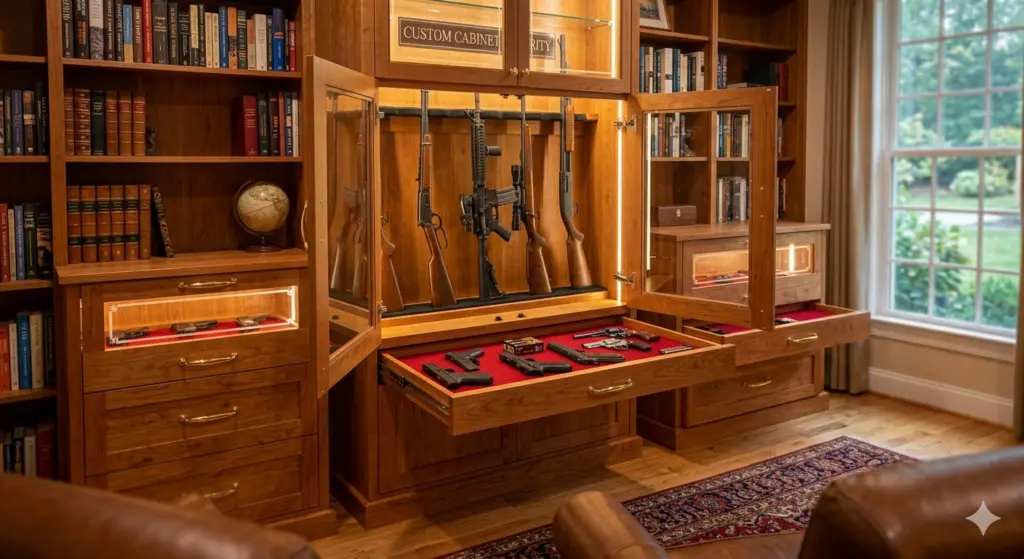
If you’ve ever bought a mass-produced gun safe from a big-box retailer, you already know what happens the moment it leaves the store. Like a factory car, it depreciates. The question most serious collectors and firearm owners are asking in 2025 is different: does a handcrafted, Amish-built gun cabinet play by different rules?
The short answer is yes. But the full picture is more nuanced, and understanding it can help you make a smarter purchase decision whether you are buying for security, display, or long-term asset value.
| Key Takeaways |
| 1. Handcrafted Amish wood cabinets depreciate far less than mass-produced steel safes because they are functional furniture, not commodity products. |
| 2. Wood species, joinery quality, and finish type are the primary drivers of long-term resale value in custom gun cabinets. |
| 3. Documented provenance (who built it, when, and with what materials) can meaningfully increase a buyer’s willingness to pay on the secondary market. |
| 4. Security upgrades like bulletproof glass, steel-reinforced locking bars, and dehumidifier systems protect value by preserving both the cabinet and the firearms inside it. |
| 5. Condition at time of resale is the single most controllable variable; a well-maintained Amish cabinet can command prices close to original retail decades later. |
Why Most Gun Safes Lose Value Fast
The traditional gun safe market is dominated by commodity steel units that compete almost entirely on price per cubic inch of interior space. Once purchased, these products face a steep depreciation curve for several predictable reasons.
The Commodity Trap
Most steel safes are manufactured overseas in large production runs. The materials are standardized, the finishes are uniform, and the designs are interchangeable. A buyer in the secondary market can almost always find a brand-new equivalent for close to the same price as a used one, which permanently caps resale potential.
Compare this to furniture. A mass-produced bookcase from a national chain store holds almost no resale value. But a hand-jointed, solid hardwood bookcase made by a skilled craftsman? That is a different conversation entirely.
Physical Wear Is Hard to Hide on Steel
Steel safes show wear in ways that dramatically reduce buyer confidence on resale. Scratches through powder coating expose bare metal and invite rust. Dents, no matter how minor, signal potential structural compromise to a cautious buyer. By contrast, solid hardwood can often be refinished to look close to original condition, restoring perceived value in a way that steel simply cannot support.
What Makes an Amish-Built Cabinet Different in Economic Terms
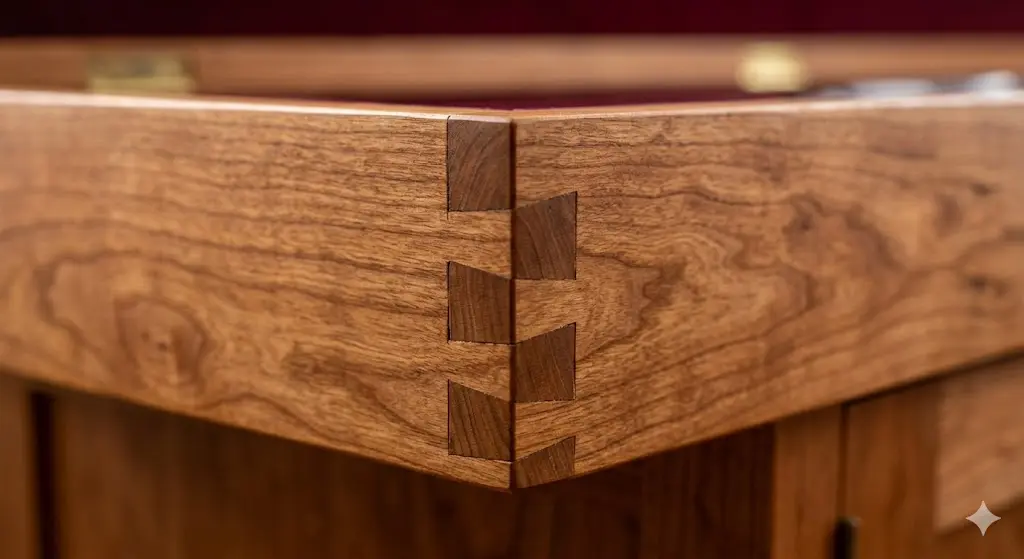
Amish craftsmen have a specific advantage that goes beyond heritage marketing. Traditional Amish woodworking relies on hand-cut joinery, solid hardwood throughout (not veneers over particle board), and time-intensive finishing techniques that produce genuinely superior durability. These are not claims. They are measurable outcomes you can feel and inspect.
The Heirloom Factor
In the antique furniture market, pieces with a documented maker, a clear origin, and intact original joinery consistently command premium prices. Amish-built gun cabinets share these exact characteristics. When a buyer can point to Arthur, Illinois as the workshop, and when the construction quality is visibly apparent in the dovetail joints and the weight of the solid wood, the piece transcends the category of “used safe” and enters the category of “heirloom furniture with security features.”
This distinction is not trivial. Heirlooms appreciate. Commodity items depreciate.
Wood Species and Resale Value
The choice of wood has a direct and measurable impact on long-term value retention. Here is a practical breakdown:
- Cherry wood: A classic American hardwood that naturally darkens and improves in appearance with age. Antique cherry furniture is consistently sought after on secondary markets. A cherry wood gun cabinet looks better at 20 years than it did at delivery.
- White oak: One of the most durable hardwoods available, with tight grain that resists moisture penetration. Oak pieces have been documented to last centuries in period furniture, which gives buyers confidence in generational ownership.
- Hickory: Known for its dramatic grain character, hickory is harder than either cherry or oak, which means it resists wear and impact. Hickory pieces are relatively rare in the custom cabinet market, which creates scarcity value.
Pro Tip: When evaluating a custom gun cabinet for purchase, ask for specifics on the wood species, the finish type, and the joinery method. These three details will tell you more about 10-year value retention than any price tag will.
Security Features as Value Anchors
A gun cabinet that looks beautiful but provides poor security is not an asset in a resale context. It is a liability. Buyers in the secondary market evaluate security features critically, and the right features can meaningfully anchor or increase the price you can ask.
Features That Retain Value
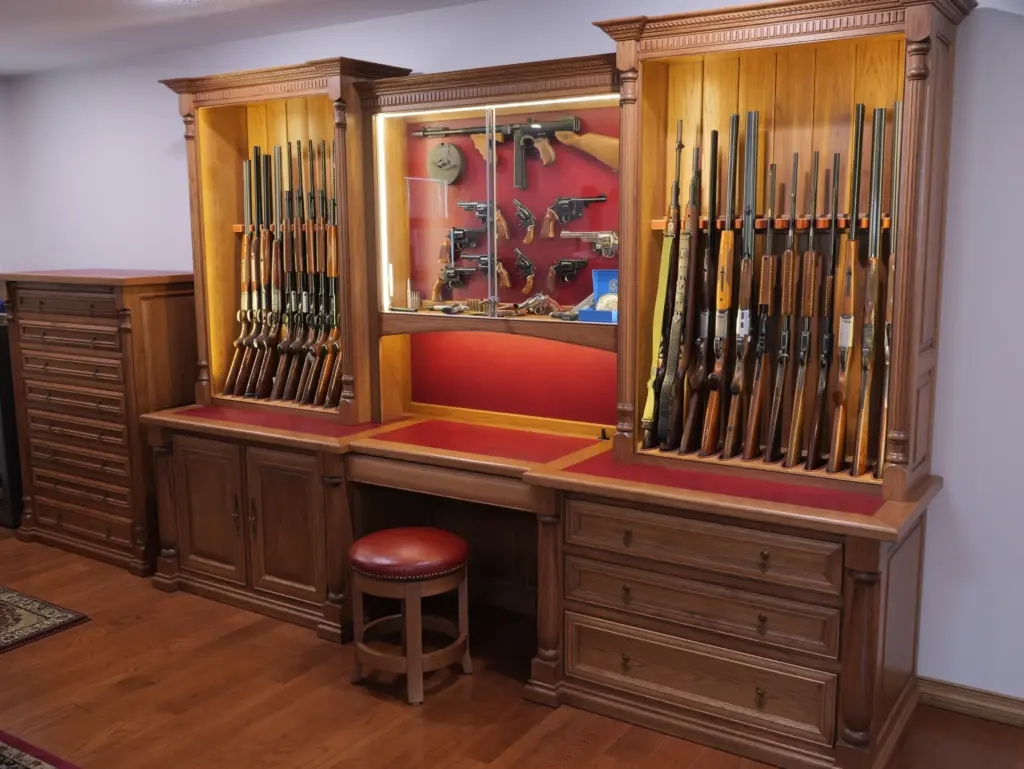
At Custom Cabinet Security, the standard product lineup includes a combination of security and preservation features that directly support resale value:
- Steel-reinforced locking bars: A discreet, steel-clad locking system that is integrated into the cabinet frame rather than bolted on. Integrated security hardware holds value better than add-on components because it signals intentional engineering rather than afterthought.
- Bulletproof glass display panels: Glass that can withstand impact while maintaining visual display. On resale, display-quality glass that is intact and free from hazing commands a significant premium over cabinets with scratched or replaced standard glass.
- Golden Rod dehumidifier systems: A passive dehumidifier that protects both the cabinet interior and the firearms stored inside. A cabinet with a working dehumidifier system that shows no moisture damage interior is a substantially stronger resale candidate than one that does not.
- Pick-resistant high-security locks: Lock integrity is one of the first things a knowledgeable buyer tests. Locks that are original, functional, and verifiably pick-resistant maintain buyer confidence and support asking price.
- Touch-control LED interior lighting: While this is primarily an aesthetic feature, intact and functional lighting systems signal to buyers that the cabinet has been well-maintained. Non-functional interior lighting is a negotiation point that will cost you more than the repair value.
The Provenance Advantage: Documentation as a Value Driver
In fine art, furniture, and collectibles, provenance documentation is often worth more than the object itself. The same principle applies to custom gun cabinets, though most buyers never think to capitalize on it.
What to Document From Day One
If you purchase a custom cabinet today with the intention of retaining or building value over time, start a simple folder, digital or physical, that contains:
- The original purchase receipt and order specifications
- Photos of the cabinet at delivery, in multiple lighting conditions
- Information about the craftsman or workshop (city, state, tradition)
- Any custom order details: wood species, finish, hardware selections
- Annual condition photos showing maintenance and care
- Records of any professional refinishing or hardware servicing
A buyer offered a custom Amish cabinet with a complete provenance folder is a more confident buyer. More confidence translates directly into a shorter time on market and a stronger negotiating position for the seller.
Custom Orders and Unique Configurations
One of the core offerings at Custom Cabinet Security is the ability to request a fully custom consultation for bespoke cabinet configurations. From the resale value perspective, this cuts both ways.
A highly customized cabinet built to fit a specific room dimension or a unique wood combination is a niche product. It will appeal to a smaller buyer pool. However, within that pool, the scarcity of an exact configuration often commands a premium. The key is matching the level of customization to a configuration that has broad appeal while still being distinguishably superior to anything available at retail.
Resale Insight: The highest-value configurations on the secondary market tend to be cherry or oak cabinets in standard long-gun sizes with intact glass and functioning security hardware. Highly unconventional dimensions or finishes narrow your buyer pool significantly.
Maintenance as an Investment Strategy
No matter how superior the original craftsmanship, neglect is the fastest path to value destruction. The good news is that Amish-built hardwood cabinets are significantly easier and less expensive to maintain than their steel counterparts, and maintenance investment directly translates into preserved resale value.
Annual Maintenance Checklist for Value Preservation
- Wood surface: Clean with a slightly damp cloth, followed by a quality furniture wax or oil appropriate to the wood species. Avoid silicone-based products, which can cloud the finish over time.
- Glass panels: Clean with a non-ammonia glass cleaner. Inspect quarterly for micro-cracks at the frame edges, which can develop from temperature cycling.
- Locking hardware: Lubricate moving lock components annually with a dry graphite lubricant. Oil-based lubricants attract dust and grit, which accelerates wear.
- Dehumidifier system: Verify the Golden Rod unit is drawing power and inspect the interior for any signs of condensation or moisture staining on a seasonal basis.
- Interior felt or velvet lining: Inspect for staining or compression. Replacement lining is inexpensive and dramatically refreshes buyer perception on inspection.
- Structural inspection: Check that door alignment is true and that hinges show no signs of loosening. Well-adjusted, gap-free doors are one of the first things a buyer notices and evaluates.
Real-World Resale: What the Secondary Market Shows Us
The secondary market for quality gun cabinets is less liquid than the new market, meaning it takes longer to find the right buyer. But this is characteristic of all quality heirloom items and is not a sign of weak demand. It is a sign of a discerning buyer pool.
Patterns that emerge from secondary market observations in the gun cabinet and fine furniture categories:
- Mass-produced steel safes typically sell for 30 to 50 percent of original retail price within the first five years, assuming functional condition.
- Quality solid-hardwood gun cabinets in good condition have been documented selling at 60 to 80 percent of original retail, and occasionally above retail when in exceptional condition with strong provenance.
- Cherry and oak antique gun cabinets from the late 19th and early 20th century regularly appear at auction in the $800 to $2,500+ range, demonstrating that well-made wooden gun storage has a documented long-arc demand curve.
- Custom or one-of-a-kind pieces with distinctive features can command strong prices when presented to the right audience, particularly among collectors who value both firearms and fine furniture.
Important context: Resale value is never guaranteed. Local market conditions, economic cycles, and buyer tastes all influence outcomes. The analysis above represents general market patterns, not a promise of return on investment.
Is a Custom Gun Cabinet a Financial Investment?
Framing a gun cabinet purely as a financial investment is an overclaim. You are not buying a stock. But framing it as a depreciating commodity is an equal and opposite mistake when the product in question is handcrafted from premium hardwoods with integrated security systems built to last generations.
The more accurate framing is this: a well-chosen, well-maintained custom Amish gun cabinet is a use asset that retains value meaningfully better than the alternatives. You get daily utility from it, your firearms stay secure and properly preserved, and when the time comes to sell, the market will reward quality in a way it will not reward a corroded steel box.
If you are weighing your options, explore the current Custom Cabinet Security collections to understand the range of configurations available at retail, and consider a custom consultation if your specific requirements fall outside the standard lineup.
The Bottom Line
The question is not whether a handcrafted Amish gun cabinet depreciates. Everything does, at least nominally. The question is how much, over what timeline, and compared to what alternative.
The evidence is consistent: Amish-built hardwood gun cabinets depreciate significantly less than mass-produced steel safes, they are substantially easier to restore to near-original condition, and they occupy a category in the secondary market where quality and provenance matter in a way that rewards careful ownership.
Buy the right species. Document everything. Maintain it consistently. And choose a workshop with a verified tradition of quality construction, the kind that builds each cabinet by hand in Arthur, Illinois, using the same principles that have made Amish furniture synonymous with durability for generations.
Ready to invest in a cabinet that holds its value? Browse the Custom Cabinet Security product lineup or reach out to the team directly for a custom consultation tailored to your collection and space.
Related Posts
View All
Uncategorized
Reading Time: 8 min
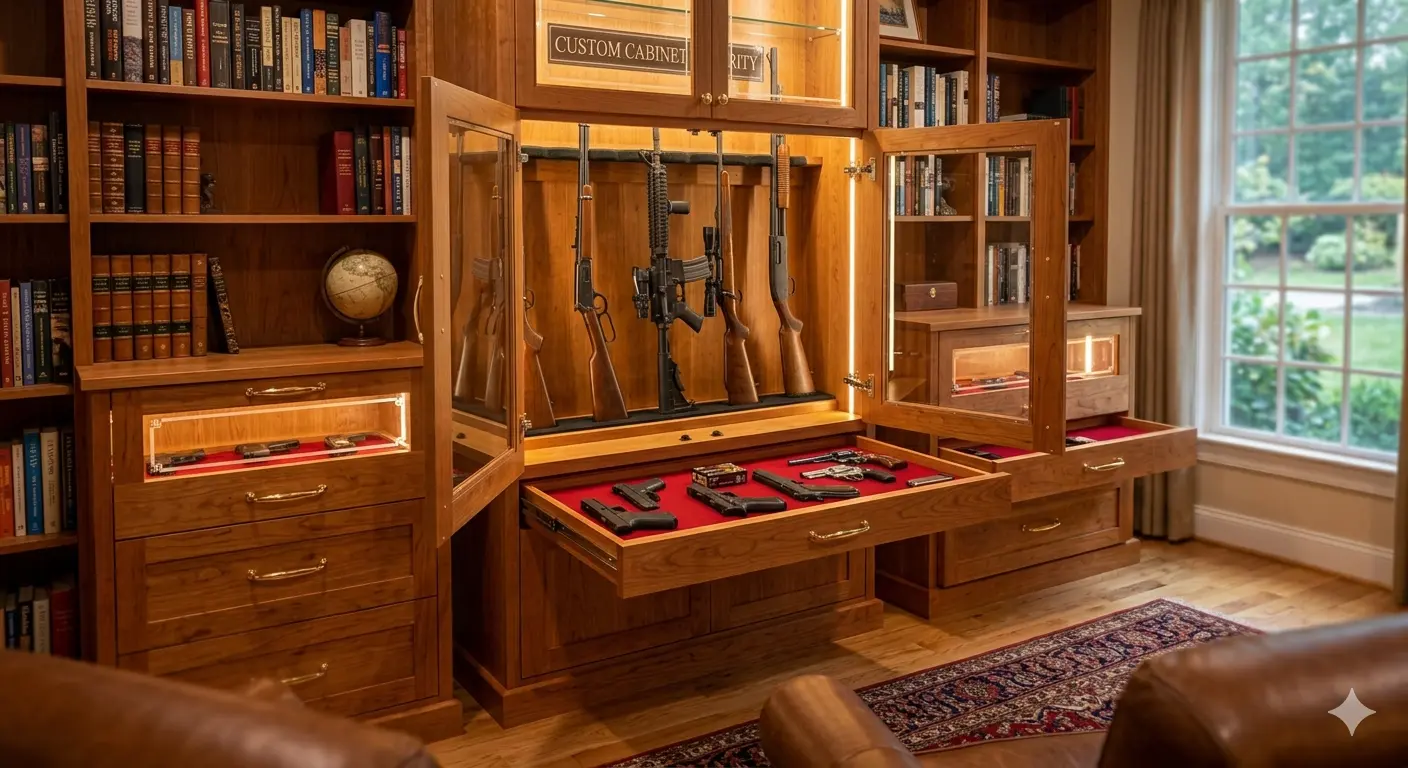
The Resale Value of a Custom Gun Cabinet: Does a Handcrafted Amish Safe Hold Its Value Over Time?
If you’ve ever bought a mass-produced gun safe from a big-box retailer, you already know what happens the moment it
Read More
Uncategorized
Reading Time: 11 min
Women Gun Owners: How to Choose a Gun Storage Solution That Fits Your Home’s Style Without Compromise
Key Takeaways The Storage Problem Nobody Talks About Walk into almost any sporting goods store and look at the gun
Read More
Uncategorized
Reading Time: 10 min
How to Protect Antique and Vintage Firearms in Wood Storage: What Collectors Need to Know About Climate and Finish
Key Takeaways Why Antique Firearms Demand a Different Standard of Storage Storing a modern production firearm and storing an 1860s
Read More
