16 Mar 2026 • Reading Time: 3 min
How to Design a Custom Firearm Safe for Your Home: The 6-Point Blueprint
Designing a custom firearm safe is a strategic process that balances uncompromising security with personalized accessibility and aesthetic integration. This blueprint guides you through the six critical decisions required to engineer the perfect security solution for your home and collection.
1. Define the Purpose and Location
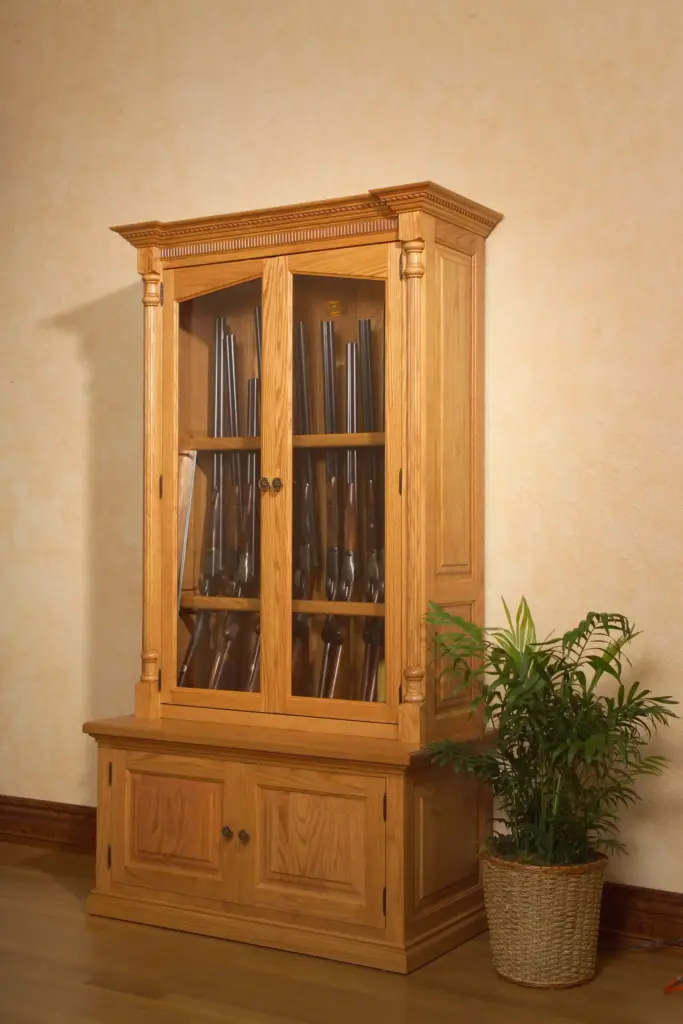
The purpose of the safe dictates its security level and size.
- Primary Goal: Is this a tactical safe for quick-access defense or a vault for long-term collection storage?
- Collection Size: Inventory your current long guns (with optics/accessories), handguns, and ammunition. Always size up by $40 to accommodate future acquisitions and allow for organized, scratch-free storage.
- Location:
- Basement/Ground Floor: Ideal for heavy safes; provides the best foundation support for high weight and enhanced fire resistance.
- Closet/Niche: Requires precise external dimensions and often a smaller depth.
- Discreet Placement: Consider a vault door in a reinforced closet or a cabinet-style safe that matches existing millwork to minimize visibility.
2. Specify the Security Rating (The Core Defense)
Do not rely on manufacturer claims; insist on third-party verification standards, primarily from Underwriters Laboratories (UL).
- UL RSC (Residential Security Container) Level 1: The minimum standard. Resists a single operator attack with basic hand tools for 5 minutes. Suitable for basic deterrence.
- UL TL-15: A significant step up. Resists a professional attack using sophisticated hand and power tools for 15 minutes of actual working time. Recommended for valuable collections.
- UL TL-30: The elite residential standard. Resists a professional attack for 30 minutes. Essential for securing high-value assets and irreplaceable items.
3. Choose Steel Thickness and Construction
The higher the security rating, the thicker the steel required. Specify the gauge of the body and the door.
- Body Steel: For serious protection, specify 7-gauge steel (approx. $0.18$ inches) or thicker.
- Door Thickness: The door is the weakest point. Demand multi-layer or 1/2-inch plate steel (common on TL-rated safes).
- Reinforcement: The design must include hardplate barriers over the lock and relocker mechanisms to resist drilling and manipulation.
4. Select the Locking Mechanism and Bolt Work
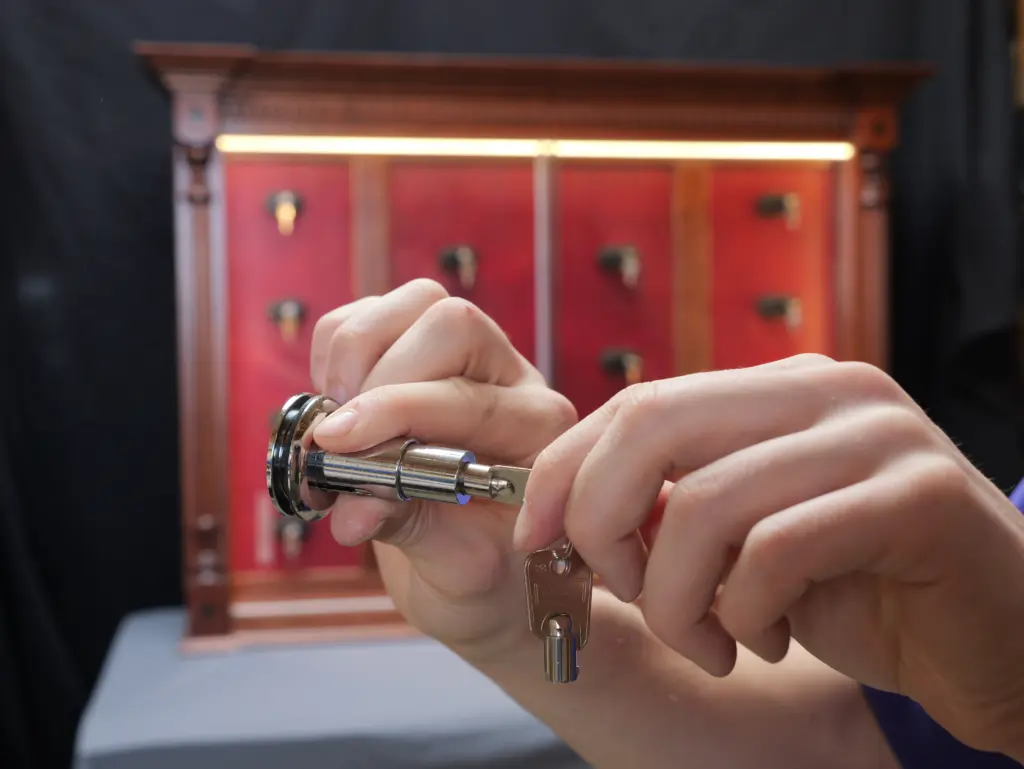
Accessibility must be balanced against security.
- Primary Lock:
- Electronic (UL Type 1): Fastest access. Convenient for daily use. (Requires battery maintenance.)
- Mechanical Dial: Ultimate reliability; no batteries required, but slower access time.
- Bolt System: Specify active bolts on all four sides (multi-directional) and ensure they are at least 1-inch in diameter solid steel.
- Relocker: A non-negotiable feature. The safe must have a spring-loaded relocker that automatically secures the bolts if the main lock is attacked or compromised.
5. Design the Interior Layout and Preservation
The interior is where the custom investment pays off, optimizing organization and firearm preservation.
- Modular Organization: Design with adjustable and removable shelving, pistol racks, and door-mounted storage that can change as your collection evolves.
- Humidity Control: Essential for preventing rust and damage to wooden stocks. Specify an integrated, electric dehumidifier rod (Golden Rod) or a thermoelectric unit, aiming to maintain internal humidity between 30% and 50%.
- Lighting: Integrate motion-activated LED lighting strips (neutral color temperature, to provide clear visibility without generating excessive heat.
6. Specify Fire Rating and Aesthetics
While security is first, fire protection and blending the safe into your home are crucial.
- Fire Rating: Look for a certified rating of at least 90 minutes at $1200^{\circ}\text{F}$. This uses specialized fireboard insulation and heat-expanding door seals to keep internal temperatures below 350 degrees Fahrenheit.
- Anchoring: Specify the number and size of anchor bolt holes (minimum four). A safe is not secure unless it is professionally bolted down to a concrete slab or reinforced subfloor.
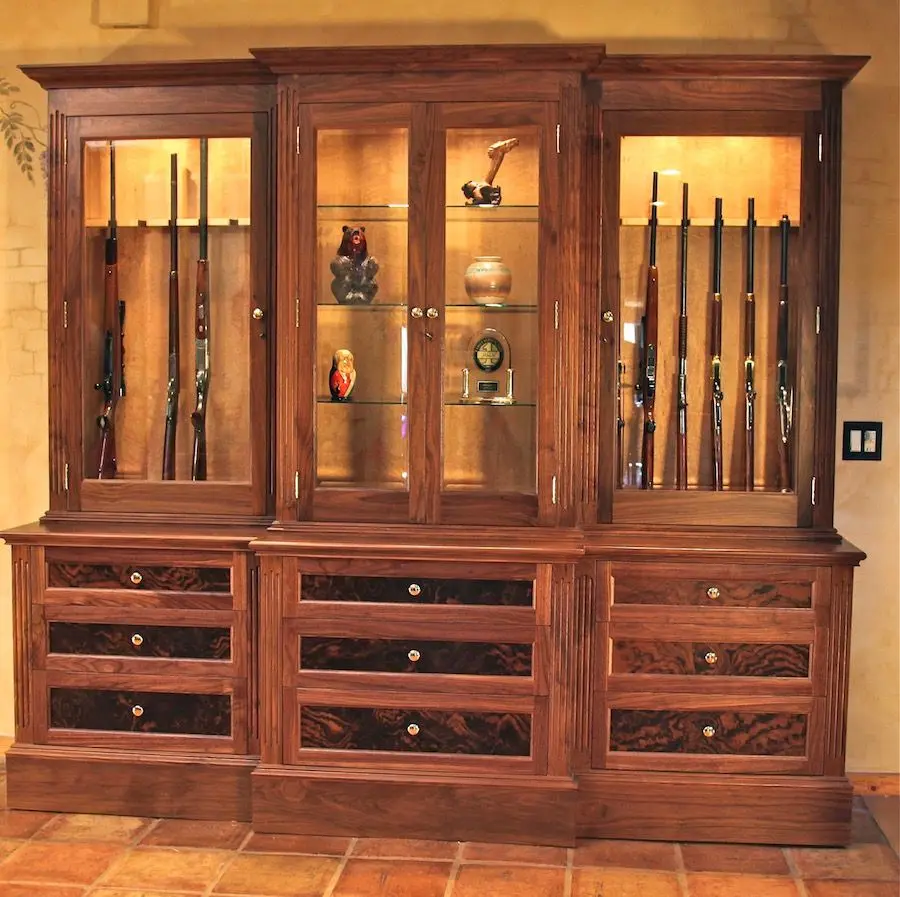
- Aesthetics: Choose custom high-gloss automotive paint, custom graphics, handle styles (e.g., chrome or ship’s wheel), or request a wood-clad exterior to integrate the steel safe seamlessly into a high-end home environment.
Related Posts
View All
Uncategorized
Reading Time: 12 min
How to Childproof Your Gun Storage Without Sacrificing Display or Quick Access
Key Takeaways A note on this topic: Child gun safety is a serious subject that deserves honest, specific treatment rather
Read More
Uncategorized
Reading Time: 12 min
Gun Safes for Home Offices and Studies: How to Blend Security Into a Professional Space
Key Takeaways The Problem With the Standard Approach Most gun owners who have a dedicated home office or study eventually
Read More
Uncategorized
Reading Time: 10 min
What the Custom Order Process Actually Looks Like: From Consultation to Delivery of Your Amish Gun Cabinet
Key Takeaways The Uncertainty Most Buyers Feel Before They Reach Out A significant number of people who spend time on
Read More
