22 May 2026 • Reading Time: 13 min
Key Takeaways
- Heirloom firearms are a category of ownership that demands a different standard of storage than a working collection. The goal shifts from convenient access to long-term preservation and meaningful presentation.
- The primary threats to heirloom condition are humidity-related corrosion, physical contact damage from improper storage, and the slow degradation that occurs when a valuable piece is treated as ordinary storage rather than as something worth protecting carefully.
- A handcrafted wood cabinet built from solid hardwood is not just the most aesthetically appropriate housing for a heirloom collection. It is also the most practically sound, because the materials and construction methods used are themselves built for generational longevity.
- Documentation and history stored alongside a firearm dramatically increases its meaning and its value to the next generation. A firearm passed down without context is a gun. The same firearm passed down with its story is a legacy.
- The storage solution for a heirloom collection should itself be an heirloom. A handcrafted cherry wood cabinet that holds a grandfather’s collection will still be serving that function for the grandchildren’s children if it is built correctly.
- Legal and estate planning considerations apply to firearm transfers between generations. Understanding the basics of how firearms are legally transferred ensures the collection reaches the intended recipients without complications.
What Makes a Firearm an Heirloom
Not every firearm in a collection is destined to become an heirloom. But some are, whether because of age and historical significance, because of the person who owned them, because of the events they witnessed, or simply because the owner has decided that this piece is one to keep in the family.
A firearm becomes an heirloom in the decision to treat it as one. That decision shapes how it is stored, how it is maintained, how it is presented, and how the story around it is preserved for the people who will receive it next.
This post is for owners who have made that decision, or who are beginning to think about which pieces in their collection deserve that status and how to give those pieces the storage, care, and context that will carry them forward in the best possible condition.
The standard for heirloom storage is higher than the standard for working storage. It accounts not just for today’s security needs but for the condition of the piece in twenty, thirty, or fifty years, and for the experience of the person who receives it when that time comes.
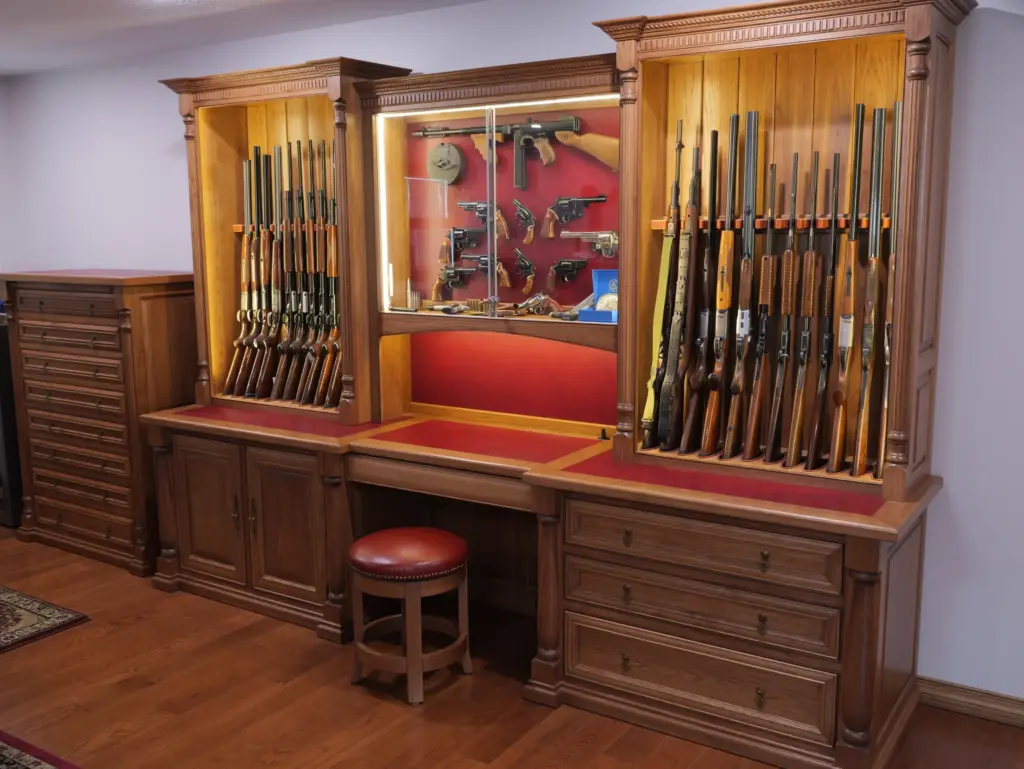
The Specific Threats to Heirloom Condition
Before addressing storage solutions, understanding what damages heirloom firearms over time makes every subsequent decision more purposeful.
Humidity and Corrosion
Corrosion is the primary long-term threat to a stored firearm. Steel corrodes in humid conditions at a rate that accelerates significantly above 60 percent relative humidity. Blued finishes, case-hardened surfaces, and bare metal components all begin to show rust at humidity levels that feel normal in many residential environments.
For an heirloom firearm with original blueing, original case hardening, or a finish applied at the time of manufacture and never restored, corrosion is irreversible. A patch of rust removed from a 100-year-old barrel removes the original metal along with the oxidation. The surface condition after treatment is not the same as it was before the damage occurred.
The implications for storage are straightforward: humidity control inside the cabinet is not optional for an heirloom collection. The Golden Rod dehumidifier integrated into Custom Cabinet Security’s cabinets maintains interior humidity in the range that prevents corrosion from beginning, which is categorically different from treating corrosion after it has started.
Physical Contact and Movement Damage
A firearm stored in an unconfigured interior, lying on a shelf or in an open tray, contacts adjacent surfaces and other pieces repeatedly over time. The small scratches, finish wear, and contact marks that accumulate from years of movement during access and repositioning are not dramatic damage events. They are slow degradation that compounds over decades into a meaningful reduction in the condition and presentation of an heirloom piece.
Fitted storage, where each firearm has a defined space with appropriate lining material that holds it in position and cushions its surfaces, prevents this category of damage entirely.
Environmental Cycling
Beyond humidity, temperature cycling stresses the materials of a firearm over time. Wood stocks expand and contract as temperature and humidity change. The repeated mechanical stress of these cycles can, over decades, affect the fit between wood and metal components in ways that alter both function and appearance.
A stable storage environment reduces this cycling. A cabinet in a climate-controlled room on an interior wall, maintained at consistent temperature and humidity year-round, subjects its contents to far less mechanical stress than storage in a garage, basement, or any space where temperature and humidity fluctuate significantly.
Improper Cleaning Agents and Methods
This threat applies during maintenance rather than storage, but it is worth noting in the context of heirloom care. Many modern cleaning products, including some petroleum-based lubricants and solvent formulations, are not appropriate for antique or collector-grade finishes. A cleaning product that works well on a modern defensive pistol can strip, dissolve, or permanently alter the original patina on a firearm produced in a different era with different finishing methods.
Heirloom firearms require cleaning methods appropriate for their specific age and finish type. When in doubt, consultation with a gunsmith who specializes in antique or collector-grade pieces is worth the time before applying any product to a surface that cannot be restored.
Why the Cabinet Itself Should Be an Heirloom
There is a meaningful correspondence between the quality of the objects being stored and the quality of the storage built to house them.
A factory steel safe with MDF shelving and vinyl interior is an adequate security device. It is not an appropriate housing for a collection that includes a great-grandfather’s lever-action rifle and the revolver that came back from a war. The materials, the construction, and the intention of a factory safe are not at the same level as the objects it might contain.
A handcrafted solid hardwood cabinet, built by Amish craftsmen using traditional joinery methods, using responsibly sourced cherry, hickory, or white oak, is a piece that can itself outlast the collection it houses. The same construction qualities that make it a superior display and storage piece, solid hardwood joinery, hand-applied finishes, fitted interiors, integrated humidity control, make it a piece that will still be functioning correctly when the people who inherit the collection open it for the first time.
This matters practically. The next generation does not just receive the firearms. They receive the cabinet with them. A handcrafted wood cabinet that has aged alongside the collection it houses, that has developed the character of quality furniture over decades of use, that holds the collection in a presentation that communicates its significance, is a more meaningful inheritance than a collection pulled out of a steel box.
The cabinet and the collection become part of the same story.
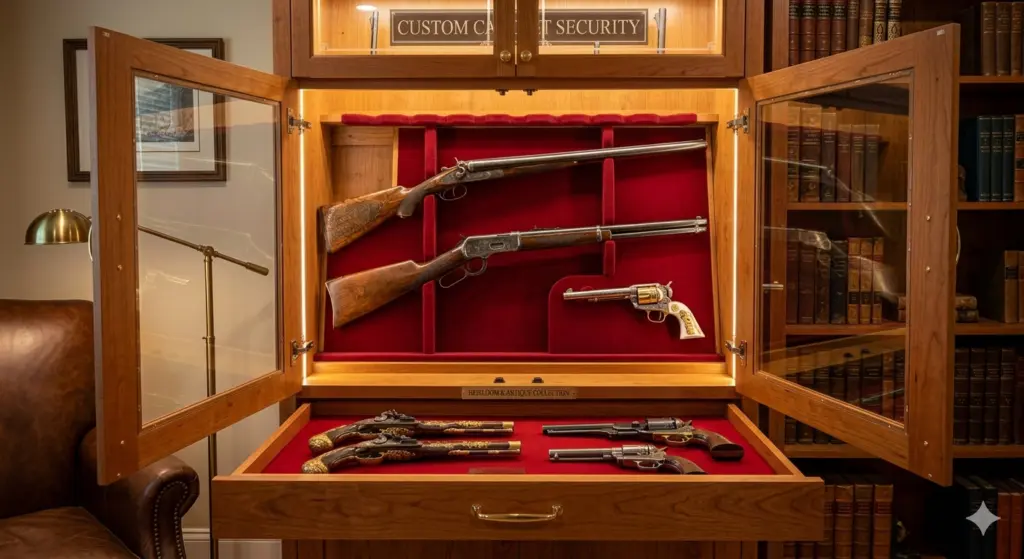
How to Configure Storage Specifically for Heirloom Pieces
Heirloom firearms often require interior configurations that differ from what a working collection needs.
Long Guns: Vertical Display with Protective Rests
A rifle or shotgun with historical significance deserves to be displayed rather than simply stored. Vertical display in fitted rests, with the stock properly supported and the barrel oriented to minimize stress on the action, is both visually appropriate and structurally sound for long-term storage.
The lining material of the rests matters. Standard foam can off-gas chemicals over time that affect metal finishes, particularly on antique pieces. Felt lining, as used throughout Custom Cabinet Security’s interiors, is chemically inert and soft enough to protect finishes without the off-gassing risks of certain synthetic foams.
For a mixed collection that includes both working and heirloom long guns, configuring different areas of the cabinet for each category is worth considering. The heirloom pieces deserve dedicated space where they are not subject to contact from pieces being accessed regularly.
Handguns: Individual Fitted Trays
A handgun with heirloom significance benefits from a fitted drawer or tray that holds it in a specific orientation, preventing contact with other pieces, and allowing it to be lifted out cleanly without the friction of a crowded tray.
A pistol chest with individually configured drawer compartments, where each significant piece has its own defined space sized to its specific dimensions, is the appropriate storage format for a meaningful handgun collection. The 8-Drawer Cherry Wood or Hickory Pistol Chest in Custom Cabinet Security’s collection provides this level of organization within a handcrafted piece that is itself built for longevity.
Documentation Storage
This is the element most heirloom storage discussions overlook entirely. A firearm without context is an object. A firearm with its story is a legacy.
Documentation that should accompany an heirloom collection includes:
- Provenance records: where the firearm came from, how it was acquired, who owned it before
- Historical context: dates, military service records, hunting history, family stories connected to the piece
- Condition documentation: photographs of the firearm at the time of storage, noting any original features, repairs, or modifications already present
- Maintenance records: what has been done to the firearm, when, and by whom
- Transfer documentation: the legal record of how ownership was established and what conditions, if any, apply to its future transfer
This documentation should be stored with the collection in a format that will survive the same time horizon. Printed photographs rather than digital-only files. Written records on archival-quality paper rather than on thermal-printed receipts that fade over years. A quality document sleeve or folder within the cabinet itself, or in a secure adjacent location referenced in the documentation.
A custom cabinet build at Custom Cabinet Security can include purpose-designed document storage as part of the interior configuration, making the historical record as much a part of the piece as the firearms themselves.
Displaying Heirloom Firearms With Dignity
The display choices made for a heirloom collection communicate something about how the collection is regarded. A thoughtful display communicates respect for the objects and their history. An afterthought display communicates the opposite, even when the intention was care.
The Case for Glass-Panel Display
A display cabinet with glass panels gives an heirloom collection a presentation format it deserves. The pieces are visible without being accessible. The LED lighting that illuminates the interior makes each piece visible in detail, allowing the finishes, the wood grain of stocks, the mechanical elegance of the action to be appreciated without handling.
For family members who will eventually inherit pieces from the collection, a display cabinet creates a living relationship with those pieces over years before the transfer ever occurs. Grandchildren who grow up seeing a grandfather’s rifle in a beautifully lit display cabinet understand its significance in a way that a collection pulled out of a steel safe for special occasions does not convey.
Light and UV Considerations
Extended exposure to UV light fades and degrades many of the materials found in older firearms, including wood stocks finished with period-appropriate products and synthetic materials in grips and accessories. Direct sunlight on displayed firearms is a long-term preservation problem.
A display cabinet positioned away from direct sunlight, with LED lighting that does not produce UV in the damaging range, protects displayed pieces from light-related degradation while still allowing them to be seen clearly.
The placement considerations discussed in our room-by-room guide to gun cabinet placement apply with particular force to heirloom collections. A display cabinet for significant pieces belongs in a stable, climate-controlled environment on an interior wall, away from windows that allow direct sunlight.
Orientation and Spacing
Firearms displayed too closely together, where the visual individual identity of each piece is lost in a dense arrangement, do not communicate the significance of specific objects. Heirloom pieces benefit from spacing that allows each to be seen as an individual object with its own history.
A custom interior configuration that assigns each significant piece its own defined position, with appropriate spacing from adjacent pieces, produces a display that reads as intentional rather than accumulated.
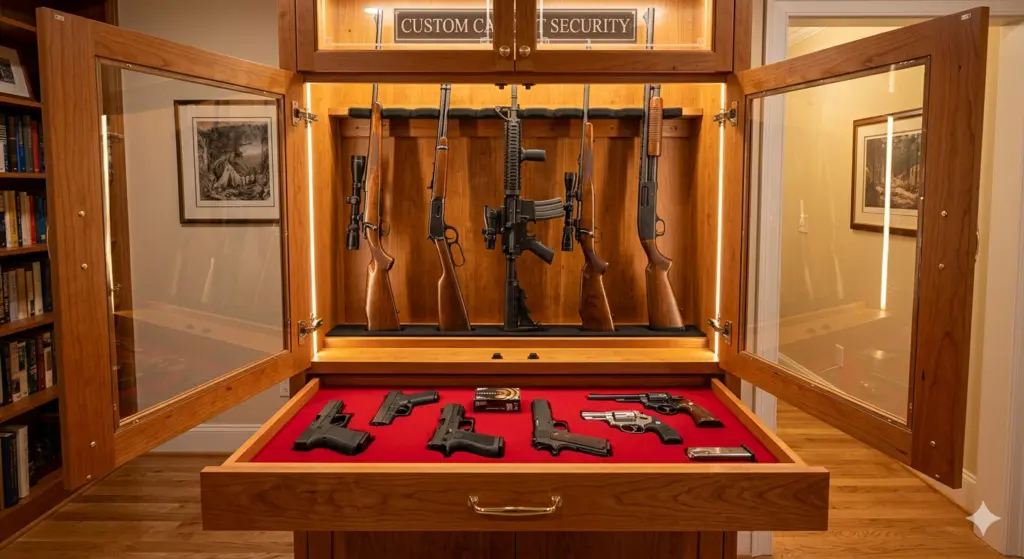
The Role of Humidity Control in Preservation
For working storage, humidity control is important. For heirloom preservation, it is critical.
The mechanisms of corrosion are patient and cumulative. A piece stored at 65 percent relative humidity for ten years accumulates damage that does not appear dramatic in any single year but becomes clearly visible over a decade. Original blueing begins to develop a reddish cast. Case hardening loses its distinctive color contrast. Metal surfaces develop micro-pitting that is felt before it is seen.
The Golden Rod dehumidifier integrated into Custom Cabinet Security’s cabinets maintains interior humidity below the threshold at which these processes begin to operate meaningfully. It draws minimal power, requires no consumable materials, and operates continuously without maintenance beyond occasional cleaning.
For heirloom pieces with original or period-correct finishes, the dehumidifier is not an optional feature. It is the element that allows the cabinet to function as preservation storage rather than simply secure storage. The distinction is between protecting a firearm from being stolen and protecting it from being slowly degraded over the same time period.
Both matter. For a piece intended to be passed to the next generation in the best possible condition, the environmental protection may matter more on a multi-decade time horizon.
Firearms That Require Special Consideration
Not all heirloom firearms present the same preservation challenges. Some categories require specific attention.
Antique Firearms
Firearms manufactured before 1899 are generally classified as antiques under federal law and are not subject to the same transfer regulations as modern firearms. Their age also means they were produced with materials, finishes, and manufacturing methods that differ substantially from modern production.
Antique firearms often have surface patina that is part of their historical character and, in collector terms, part of their value. Aggressive cleaning or restoration of this patina is not neutral. It can significantly affect the piece’s value and alter the historical authenticity that makes it significant.
For antiques, preservation means maintaining condition rather than improving it. Storage conditions that prevent further degradation are the goal, not restoration of the piece to an appearance it had before the current owner acquired it.
Engraved or Decorated Firearms
Firearms with significant engraving, inlaid work, or decorative finishes require storage that protects these surfaces from contact damage. The relief of engraving creates surface geometry that collects dust and is susceptible to abrasion from adjacent surfaces. A fitted storage position that keeps the piece isolated from contact is important for these pieces.
Firearms with Wood Stocks
Wood stocks in older firearms are often finished with period products, including shellac, linseed oil, and other formulations that respond differently to modern conditions than the more stable synthetic finishes applied to contemporary firearms. Maintaining the wood in a stable humidity environment prevents the swelling and checking that affects period stocks.
A humidity level of approximately 45 to 55 percent relative humidity is generally ideal for wood stock preservation, which aligns with the range maintained by a properly functioning dehumidifier system.
Passing Down: Legal and Practical Considerations
A collection designated as a family legacy requires some planning to ensure it actually reaches the intended recipients without complications.
Understanding Firearm Transfer Requirements
The legal requirements for transferring firearms to family members vary by state and by whether the transfer occurs during the owner’s lifetime or through an estate.
Federal baseline: Federal law generally permits the transfer of firearms between immediate family members residing in the same state without going through a licensed dealer (FFL), with some exceptions for certain firearm categories.
State variation: Many states impose requirements beyond the federal baseline. Background check requirements, waiting periods, and registration requirements vary significantly by state. Consulting with an attorney familiar with firearms law in the relevant state before planning a specific transfer strategy is the appropriate approach.
Across state lines: Transfers between family members in different states generally require going through an FFL dealer in the recipient’s state, similar to a standard commercial transfer. This process is straightforward but requires planning.
Estate Planning for a Firearm Collection
A firearm collection should be specifically addressed in estate planning documents. A general bequest of personal property may not clearly convey a collection that has specific legal, financial, and historical significance.
An estate plan for a meaningful firearm collection should:
- Identify each significant piece specifically, including serial numbers and descriptions
- Name the intended recipient for each piece or for the collection as a whole
- Include instructions for how the transfer should be handled, including whether an attorney or FFL should facilitate the process
- Address the value of the collection for estate tax purposes if applicable
An estate planning attorney with familiarity with firearm collections is the appropriate resource for structuring this documentation.
Appraisal and Insurance
A meaningful heirloom collection benefits from a formal appraisal by a qualified appraiser who specializes in collectible or antique firearms. The appraisal establishes the fair market value of each piece, which is relevant for insurance purposes, estate valuation, and as part of the documentation record that accompanies the collection.
Standard homeowner’s insurance policies typically provide limited coverage for firearm collections, often capped at values that fall well short of meaningful collections. A specific scheduled firearms rider or a specialty collectibles policy ensures the collection is covered at its actual appraised value.
Building the Collection’s Story
The most undervalued element in heirloom preservation is the narrative that makes the physical objects meaningful.
A firearm is a manufactured object. Its significance as a family heirloom comes from the story attached to it: who carried it, when, where, and why. Without that story, the next generation inherits an object of unknown history. With it, they inherit a connection to the people who came before them.
Building and preserving this narrative is as much a part of heirloom stewardship as the physical storage decisions.
Practical steps:
Write down what you know about each significant piece, now, while the knowledge is current. The stories that feel too familiar to require documentation have a way of not surviving the death of the person who holds them. A single page of notes per firearm, recording provenance, history, and personal significance, is something a descendant will be deeply grateful for.
Photograph each piece in its current condition, noting any features or marks that have specific meaning. A small mark or worn spot that looks like ordinary use to a stranger may be the exact detail that connects the piece to a specific story.
Record the oral history. If there are family members older than the current owner who have knowledge of significant pieces, audio or video recording their recollections is a form of preservation that printed notes cannot fully replace.
Store these materials with the collection in a format that will survive the same time horizon as the physical objects.
The Cabinet as the Carrier of the Story
A custom-built handcrafted cabinet is not just the container for a heirloom collection. It is part of the context that communicates the collection’s significance.
When a grandchild opens a beautifully crafted cherry wood cabinet in a grandfather’s study, the quality of what they see tells them something before they even examine a single firearm. They see that these pieces were regarded with care, that the housing chosen for them was built to last, that the person who assembled this collection and this cabinet understood them as worth preserving.
That communication is not trivial. It is the first transmission of value from one generation to the next.
The custom consultation process at Custom Cabinet Security is designed for exactly this kind of project. A collector who has a specific collection to house, specific pieces that tell a specific story, and a vision for the cabinet that will hold and present them for decades to come, is describing the conversation the craftsmen in Arthur, Illinois are built to have.
The result is a piece that holds the collection today, will hold it in thirty years, and will tell the next generation something important about the person who built both the cabinet and the legacy it houses.
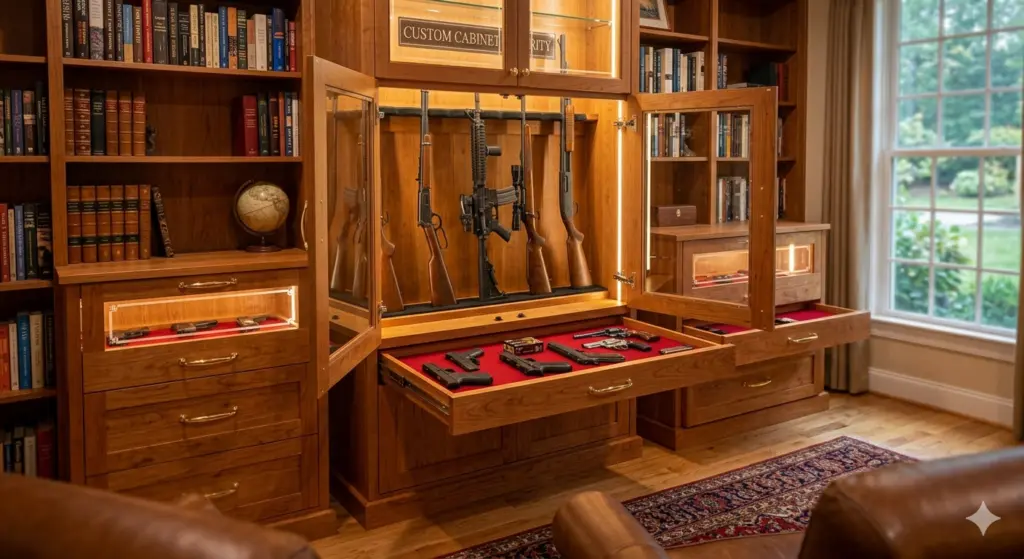
The Bottom Line
An heirloom firearm collection is a responsibility as much as it is a possession. The decisions made about its storage, its documentation, its presentation, and its eventual transfer shape the experience of everyone who inherits it.
Getting those decisions right means choosing storage built to the same standard as the collection it houses. It means controlling the environment that could otherwise slowly degrade what it is supposed to protect. It means building the story around each piece so the next generation receives not just objects but meaning.
A handcrafted solid wood cabinet, built by craftsmen who themselves work in a tradition designed to outlast individual careers and projects, is the appropriate home for firearms that are meant to outlast individual lives.
The combination of quality storage and quality care is what turns a collection of valuable objects into a legacy worth receiving.
Related Posts
View All
Uncategorized
Reading Time: 12 min
How to Childproof Your Gun Storage Without Sacrificing Display or Quick Access
Key Takeaways A note on this topic: Child gun safety is a serious subject that deserves honest, specific treatment rather
Read More
Uncategorized
Reading Time: 12 min
Gun Safes for Home Offices and Studies: How to Blend Security Into a Professional Space
Key Takeaways The Problem With the Standard Approach Most gun owners who have a dedicated home office or study eventually
Read More
Uncategorized
Reading Time: 10 min
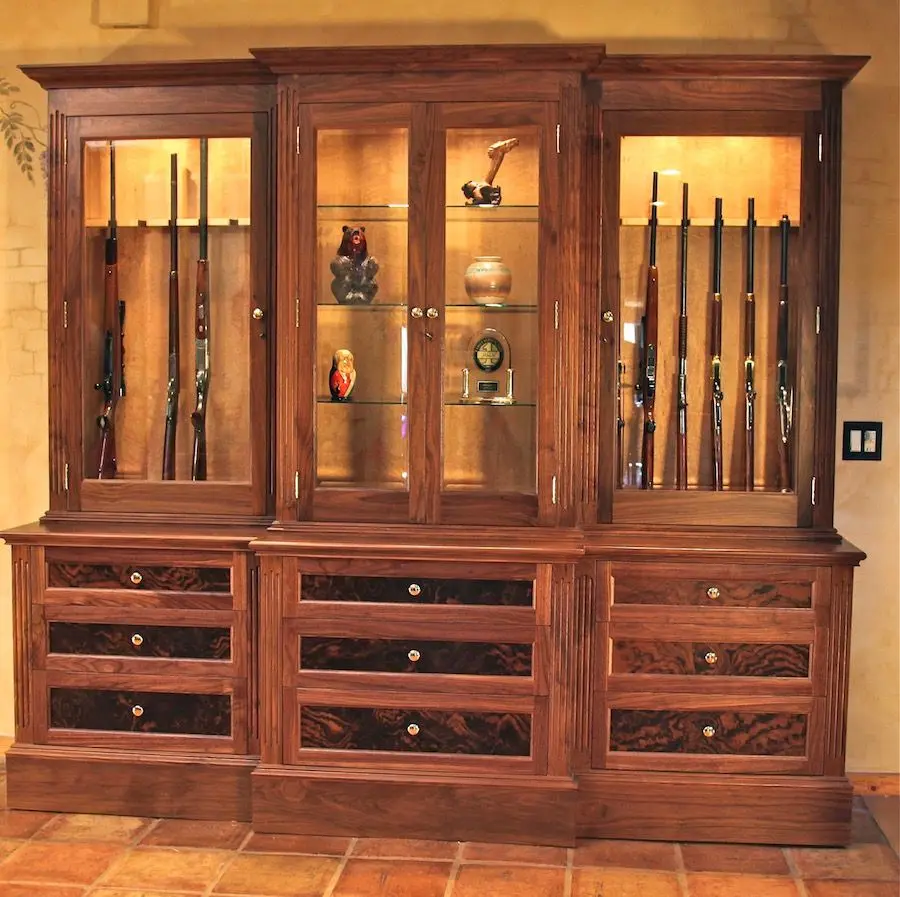
What the Custom Order Process Actually Looks Like: From Consultation to Delivery of Your Amish Gun Cabinet
Key Takeaways The Uncertainty Most Buyers Feel Before They Reach Out A significant number of people who spend time on
Read More
