24 Apr 2026 • Reading Time: 11 min
Key Takeaways
- Factory gun safes are engineered for production efficiency and price competition. Amish-built gun cabinets are engineered for permanence, craftsmanship, and the specific needs of the buyer who orders them.
- The structural difference between a solid hardwood cabinet built by a skilled craftsman and a welded sheet-metal box wrapped in thin veneer is not a matter of preference. It is a matter of longevity, appearance, and daily function.
- Amish woodworking traditions prioritize joinery and material integrity that factory production lines cannot replicate at any price point in the mass market.
- A gun cabinet built by Amish craftsmen is not just a storage unit. It is a piece of furniture that integrates into a home, displays a collection with dignity, and holds its structural integrity for generations.
- Custom configuration options available in hand-built cabinets simply do not exist in the factory world. If a collector has specific needs, factory products offer a limited menu. Custom builders offer a conversation.
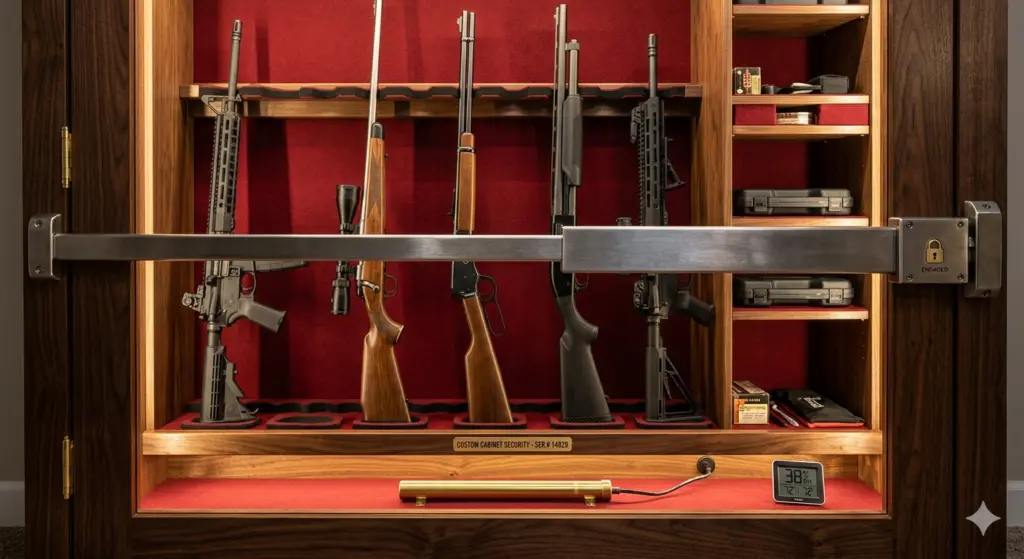
- The security features in a premium Amish-built cabinet, including steel-reinforced bars, bulletproof glass, pick-resistant locks, and integrated dehumidifiers, are not afterthoughts bolted onto a wooden box. They are engineered into the build from the beginning.
The Standard That Factory Production Cannot Reach
Walk into any big-box sporting goods store and you will find a wall of gun safes. They range from entry-level sheet metal boxes with digital keypads to heavy-gauge steel units with fire ratings and multiple locking bolts. Some of them are reasonably secure. A few of them are genuinely tough.
What none of them are is handcrafted.
Every factory safe in that store was designed on a computer, stamped from sheet metal or plate steel, welded on an automated line, and spray-finished in a production environment optimized for throughput. The person whose name is not on any of them made decisions based on manufacturing cost and retail price point, not on the traditions of a craft or the specific needs of the person who will ultimately own it.
That is a fundamental difference in orientation that affects every single aspect of what the finished product is.
An Amish-built gun cabinet begins with a conversation about what the owner actually needs. It is built from solid hardwood by craftsmen who learned their trade through apprenticeship in a tradition that measures quality in generations, not quarterly reports. Every joint, every fit, every finish decision is made by human hands and human judgment, not by a stamping die and a quality control checklist.
This post is not an argument that factory safes have no place. They do. It is an honest explanation of why the two categories are not comparable, and why serious collectors, hunters, and firearm owners who care about both security and aesthetics consistently choose hand-built cabinets over factory production.
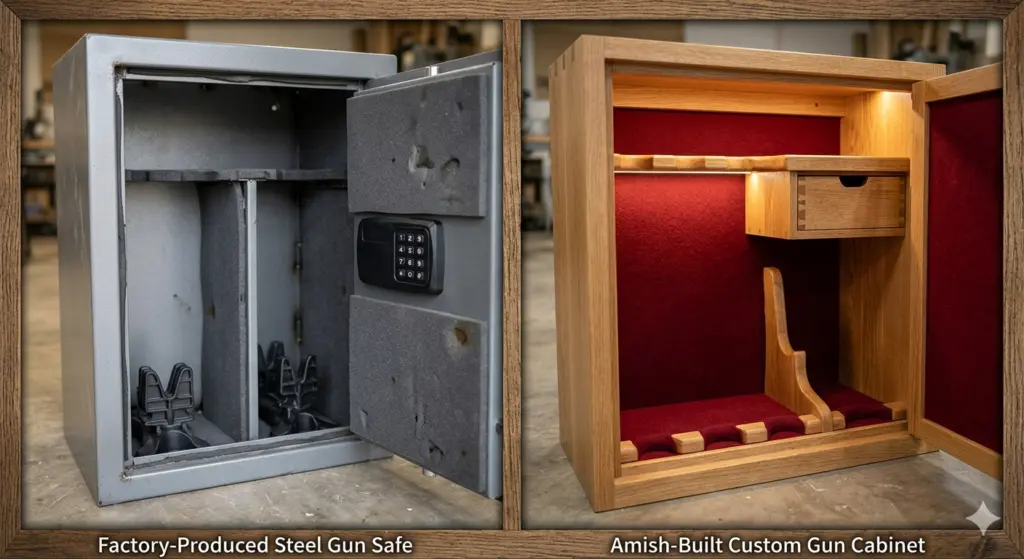
The Material Difference: Solid Hardwood vs. Steel Sheet
The most fundamental comparison between an Amish-built gun cabinet and a factory safe starts with the material.
What Factory Safes Are Actually Made Of
The vast majority of consumer-grade gun safes are built from steel sheet, typically between 12 and 16 gauge. The heaviest residential safes use 7 or 10 gauge plate steel. Both represent legitimate security materials, but neither produces a piece of furniture.
The “wood” elements in most factory safes are not wood in any meaningful sense. They are medium-density fiberboard, or MDF, wrapped in paper or PVC veneer that mimics a wood grain pattern. MDF is an engineered wood product made from compressed wood fibers and resin binders. It is inexpensive, dimensionally stable for certain applications, and entirely unsuitable for fine joinery or structural furniture.
When a factory safe is marketed as having “wood accents” or a “wood interior,” this is almost always what they mean.
What Amish-Built Cabinets Are Actually Made Of
Amish woodworking uses solid hardwood as a non-negotiable starting point. At Custom Cabinet Security, based in Arthur, IL, the craftsmen work with responsibly sourced hardwoods including cherry wood, hickory, and white oak, each selected for grain character, dimensional stability, and appearance under finish.
Solid hardwood behaves differently than MDF in every way that matters for a piece of permanent furniture:
- It accepts hand-applied finishes and develops character over decades of use
- It can be repaired, refinished, and restored rather than replaced
- It holds joinery with the structural integrity of the wood fiber itself, not just glue or fasteners
- It responds to humidity and temperature naturally, which Amish craftsmen account for in their construction methods
The difference between a cherry wood gun cabinet with dovetailed drawer construction and a factory safe with MDF shelving and vinyl flooring is not a subtle one. It is visible, tactile, and structural.
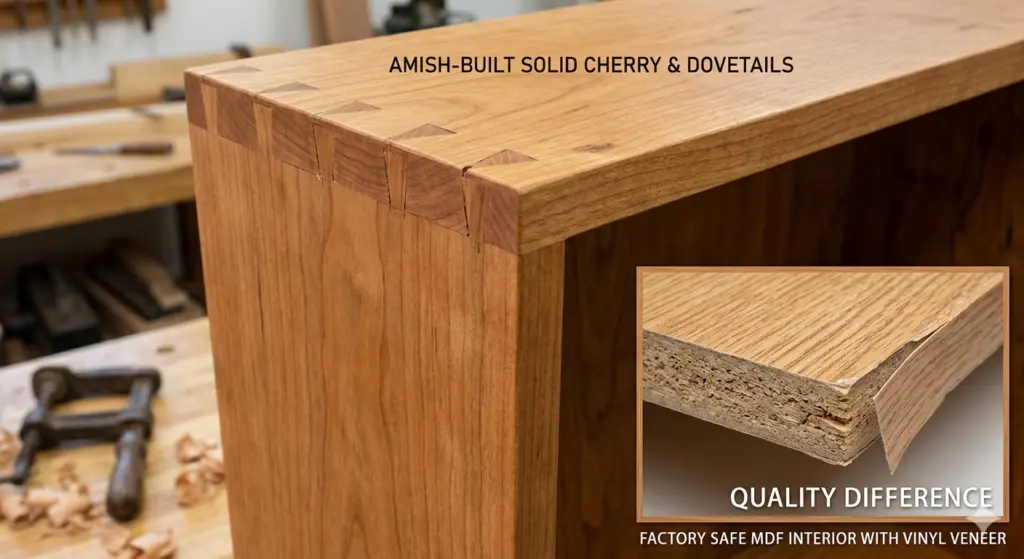
The Construction Difference: Joinery vs. Assembly
Material quality is half the story. How that material is assembled into a finished cabinet is the other half.
Factory Safe Construction
Factory safes are assembled, not built. Stamped steel panels are welded or bolted together at joints. Interior components are screwed or riveted in place. The process is fast, repeatable, and optimized for consistency at scale.
This is not a criticism of factory safes as security devices. A welded steel box does what a welded steel box does. The point is that the construction method has a ceiling on what it can produce. It cannot produce fine furniture because it is not a furniture-making process.
Amish Joinery Traditions
Amish woodworking is built on joinery traditions that predate power tools and have survived because they produce structural results that no other method replicates. The most important of these in cabinet construction include:
Dovetail joints: Interlocking trapezoidal cuts used primarily in drawer construction. The mechanical interlock of a hand-cut dovetail holds under tensile and shear force without relying solely on glue. A drawer built with true dovetail joinery does not come apart over decades of use. It becomes tighter.
Mortise and tenon: The foundational joint of frame-and-panel construction. A tenon cut from one member fits precisely into a mortise cut in another, creating a joint that transfers load through mechanical connection before adhesive is even considered. Properly cut mortise and tenon joints have been found intact in furniture built centuries ago.
Frame and panel construction: The method that allows solid wood to expand and contract naturally with seasonal humidity changes without splitting or warping the overall structure. Factory furniture made from sheet goods does not require this approach, but sheet goods also do not last the way solid hardwood does.
These methods require skill that takes years to develop. An Amish craftsman who builds gun cabinets has spent thousands of hours developing the hand-eye coordination, material intuition, and technical knowledge to execute these joints accurately. A factory production line does not produce this skill and cannot replicate its results.
The Security Difference: Integrated vs. Afterthought
A common misconception about hand-built wooden gun cabinets is that they sacrifice security for aesthetics. This misunderstands what a well-built custom cabinet actually contains.
The gun cabinets built by Custom Cabinet Security are not wooden boxes with a padlock. They combine the structural integrity of solid hardwood construction with security features that are engineered into the design from the beginning, not bolted on after the fact.
What Integrated Security Looks Like
Steel-reinforced bar locking system: A discreet steel-clad locking mechanism that secures the cabinet without compromising the appearance of the exterior woodwork. The steel bar engages the frame through the wood structure, not just at the surface.
Bulletproof glass display panels: The glass used in display configurations is rated to resist impact far beyond ordinary glass, protecting both the contents and anyone in proximity in the event of an attempted forced entry.
Pick-resistant high-security locks: The lock cylinders used are specified for resistance to picking, drilling, and bypass techniques, not selected from a commodity lock catalog based on price.
Golden Rod dehumidifier integration: A dehumidifier rod keeps the interior humidity controlled, protecting both the wood structure and the metal components of stored firearms from corrosion. This feature is designed into the cabinet, not dropped in after the fact.
LED lighting with touch control: Illumination that makes the cabinet functional as both a display and a working storage system, without generating heat or creating condensation risks.
Factory safes at the consumer level often include some of these features individually. What they rarely do is integrate them into a design where each element works with the others and the overall structure supports the security function without compromise.
The Aesthetic Difference: Furniture vs. Safe
This distinction matters more than most buyers initially expect, and it is worth addressing directly.
A standard gun safe sits in a corner, a closet, or a garage and announces itself as a security device. It looks like what it is. For buyers who want secure storage without any display function, this is entirely acceptable.
But many firearm owners have collections they have spent years building. They own pieces with historical significance, custom configurations, or simply high monetary and personal value. Storing them in the equivalent of a filing cabinet does not reflect what those pieces mean.
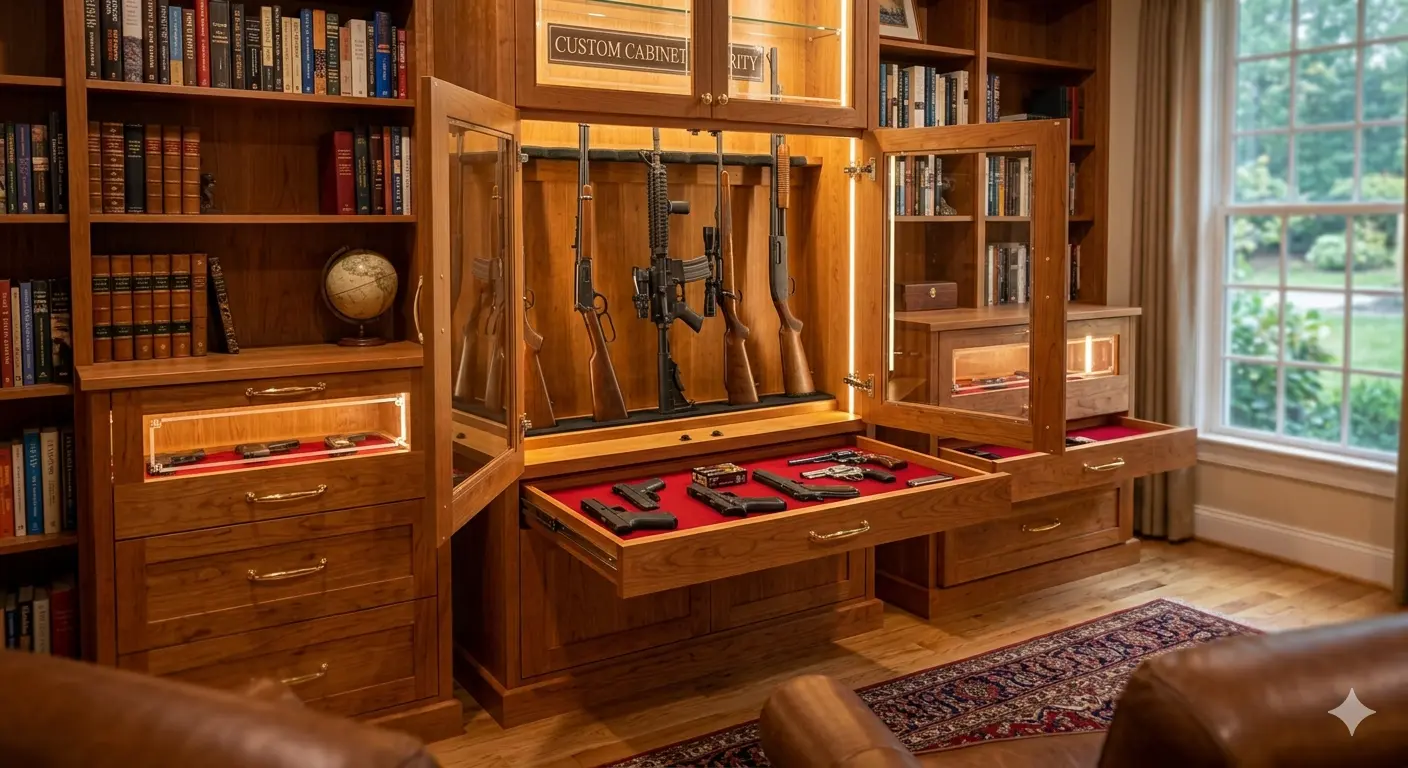
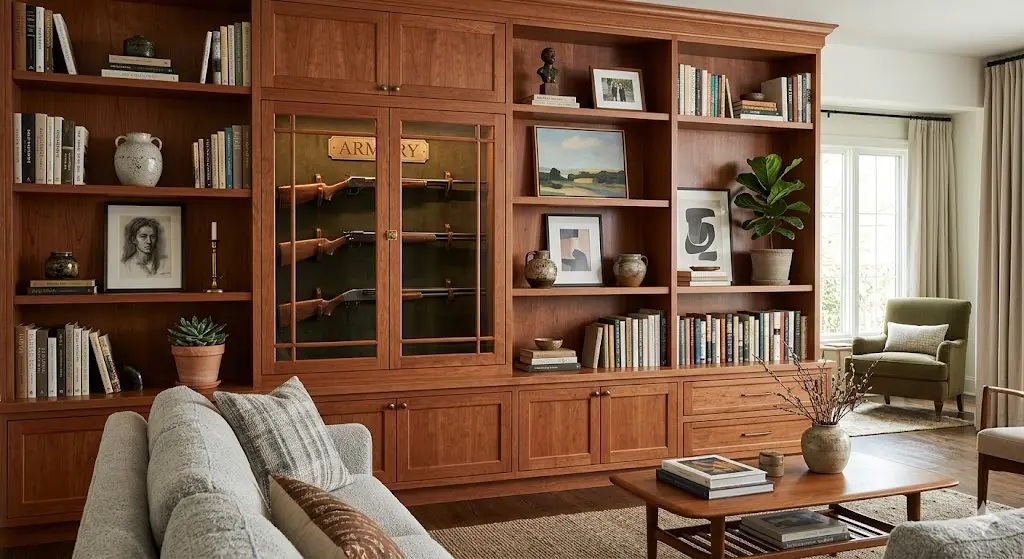
An Amish-built gun cabinet is a piece of furniture. It belongs in a living room, a library, a study, or a dedicated display space. It communicates something about the owner’s relationship with their collection. It invites engagement with what is stored inside rather than hiding it behind a steel door.
The cherry wood and hickory cabinets built in Arthur, IL are the kind of pieces that become part of a room’s character. The grain figure of the hardwood, the hand-applied finish, the fitted interior with felt lining and LED lighting, the proportions of a cabinet built for the specific collection it holds, all of these produce an object that is visually compelling independent of its function.
This is not a minor consideration for the buyer who has spent decades accumulating a meaningful collection. The cabinet that houses that collection is part of how it is presented to family, guests, and ultimately the next generation.
The Customization Difference: A Menu vs. A Conversation
Factory safes are sold in configurations. You choose from the options the manufacturer has decided to produce, within the constraints of what their production line supports. If your needs fall outside those configurations, the answer is no.
Custom Cabinet Security operates differently. The starting point is a conversation about what the buyer actually needs.
What Custom Configuration Means in Practice
Rifle capacity: The number of long guns a cabinet needs to store varies significantly from collection to collection. A custom build is sized for the actual collection, not a round-number production unit.
Pistol storage: Drawers, display trays, fitted compartments, or some combination of all three. The configuration follows the collection.
Wood species selection: Cherry wood, white oak, and hickory each produce a different aesthetic result and a different character of grain. The buyer chooses based on the room it will live in and the visual result they want.
Interior configuration: Felt lining color, display orientation, shelf height, drawer configuration, lighting placement. Each of these is a decision made for the specific piece, not a factory default.
Security specification: The level of security, the lock type, the glass specification, and the locking mechanism configuration are all decisions made in conversation with the buyer’s actual security requirements.
This degree of customization is not available from any factory production line. It is only available from craftsmen who build one cabinet at a time to the specifications of the person who commissioned it.
You can explore the range of what is possible at Custom Cabinet Security’s full collection of gun safes and cabinets, which includes collector favorites alongside the custom consultation pathway for buyers with specific requirements.
[IMAGE: Photograph showing three different Custom Cabinet Security gun cabinets side by side in different wood species: cherry wood with dark finish, white oak with lighter natural finish, and hickory with visible grain variation, illustrating the aesthetic range available through custom wood selection]
The Longevity Difference: Heirloom vs. Disposable
Here is the question that most buyers do not ask at the point of purchase but eventually wish they had: How long will this last?
A factory gun safe built from steel sheet, MDF interior components, and vinyl veneer has a functional lifespan measured in decades under normal conditions. The steel resists unauthorized entry. The MDF interior absorbs humidity and eventually degrades. The veneer chips, peels, or discolors. Hinges and mechanisms wear or corrode. When the exterior finish fails on a factory safe, the safe’s useful life is largely over.
A solid hardwood gun cabinet built with traditional joinery has a different kind of lifespan. The cherry wood cabinet in a grandfather’s study does not become a grandfather’s cabinet because of age alone. It becomes one because the material and construction quality are such that the piece holds its structural integrity, aesthetic character, and functional capability across generations of use.
What makes an Amish-built cabinet heirloom quality:
- Solid hardwood does not delaminate, swell, or degrade the way engineered wood products do over long time periods
- Traditional joinery gets tighter, not looser, with age and seasonal cycling
- Hand-applied finishes can be stripped and renewed without affecting the structural wood beneath
- Hardware is replaceable and upgradeable without replacing the cabinet itself
- The cabinet can be refinished to new condition at any point in its life
This is not a marginal difference. It is the difference between a purchase and an investment. A factory safe is a purchase. An Amish-built gun cabinet is something a buyer might reasonably expect to pass to their children.
The Origin Difference: Arthur, IL vs. An Overseas Factory
Custom Cabinet Security builds every cabinet in Arthur, Illinois. Arthur is the heart of one of the largest Amish communities in the United States, with a woodworking tradition that has produced skilled craftsmen for generations.
The Amish craftsmen who build these cabinets are not interchangeable production workers following standardized instructions. They are skilled tradespeople whose knowledge of wood selection, joinery, finishing, and cabinet construction has been developed through years of training and practice.
The contrast with the production origin of most factory gun safes is significant. The majority of consumer-grade safes sold in the United States are manufactured overseas, where labor costs and quality control standards are different from what a craftsman-built domestic product involves.
This matters for several reasons beyond economic preference:
- The craftsmen building each cabinet are accountable for their work in a way that anonymous factory production is not
- Quality control is personal rather than statistical
- The woodworking traditions being applied are rooted in a specific place and culture with a documented history of producing work that lasts
- Direct communication with the builders is possible for custom orders in a way it simply is not with overseas factory production
For buyers who care about where their furniture is built and by whom, this is not a small consideration.
Who Chooses an Amish-Built Gun Cabinet
The buyer for a custom Amish-built gun cabinet is generally not the first-time firearm owner who needs basic secure storage and is buying on price. Factory products serve that buyer well.
The buyer who chooses an Amish-built cabinet typically falls into one of a few categories:
The serious collector: Someone who has built a collection over years and wants storage that reflects the value and significance of what they own. They are not looking for the cheapest way to keep guns locked up. They are looking for a display and storage solution that treats their collection with respect.
The homeowner who cares about interior aesthetics: Someone who will not accept an industrial-looking steel box in their living space but is not willing to compromise on security. The combination of furniture quality and genuine security integration is what they have been looking for.
The buyer planning for multiple generations: Someone who is thinking about what they will eventually pass on and wants a cabinet that will still be functional and beautiful when that day comes.
The buyer with specific requirements: Someone whose collection does not fit neatly into factory configurations, who needs a specific combination of rifle capacity, pistol storage, and interior features that no production line offers.
If any of these describe you, the custom consultation process at Custom Cabinet Security is the starting point for a conversation about what a cabinet built for your specific collection and space would look like.
[IMAGE: Photograph of a finished cherry wood Custom Cabinet Security gun cabinet in a home setting, displayed in a wood-paneled study or library room, showing how the cabinet integrates naturally with high-quality residential furniture and decor rather than standing out as a utilitarian storage device]
The Comparison in Plain Terms
For a buyer deciding between a factory gun safe and an Amish-built cabinet, here is the direct comparison across the factors that matter most:
Material quality: Factory safes use steel with MDF and vinyl interiors. Amish-built cabinets use solid hardwood throughout, with steel security components integrated into the design.
Construction method: Factory safes are assembled on production lines with standardized components. Amish cabinets are built by skilled craftsmen using joinery traditions that produce structural results no production line replicates.
Security integration: Factory safes offer security as the primary function with aesthetics secondary. Amish-built cabinets offer equal security with the integration engineered from the design stage rather than treated as an add-on.
Customization: Factory safes offer configuration choices within a limited production menu. Custom Cabinet Security offers a genuine custom build process with the buyer’s specific needs as the starting point.
Aesthetics: Factory safes look like safes. Amish-built cabinets look like furniture.
Longevity: Factory safes have a functional lifespan of decades before materials degrade. Amish-built cabinets are built for generational use.
Origin: Factory safes are typically produced overseas at scale. Custom Cabinet Security cabinets are built by Amish craftsmen in Arthur, Illinois.
These are not preference differences. They are category differences. A factory gun safe and an Amish-built gun cabinet solve the same problem in fundamentally different ways, for different buyers, with different long-term outcomes.
The Bottom Line
Factory gun safes exist for a legitimate reason. They provide accessible, reliable security at a price point that makes sense for a large portion of the firearm-owning market, and they do that job adequately.
But adequate has never been the standard Amish craftsmen build to.
The gun cabinets coming out of Arthur, Illinois are not competing on price with the factory wall at a sporting goods store. They are competing on the entirely different standard of what a piece of handcrafted, solid-hardwood furniture with integrated security should be. And on that standard, the comparison is not close.
For the buyer who wants a cabinet that reflects the quality of their collection, integrates into a home rather than interrupting it, and will still be worth passing down in thirty years, the choice is clear.
Related Posts
View All
Uncategorized
Reading Time: 8 min
The Resale Value of a Custom Gun Cabinet: Does a Handcrafted Amish Safe Hold Its Value Over Time?
If you’ve ever bought a mass-produced gun safe from a big-box retailer, you already know what happens the moment it
Read More
Uncategorized
Reading Time: 11 min
Women Gun Owners: How to Choose a Gun Storage Solution That Fits Your Home’s Style Without Compromise
Key Takeaways The Storage Problem Nobody Talks About Walk into almost any sporting goods store and look at the gun
Read More
Uncategorized
Reading Time: 10 min
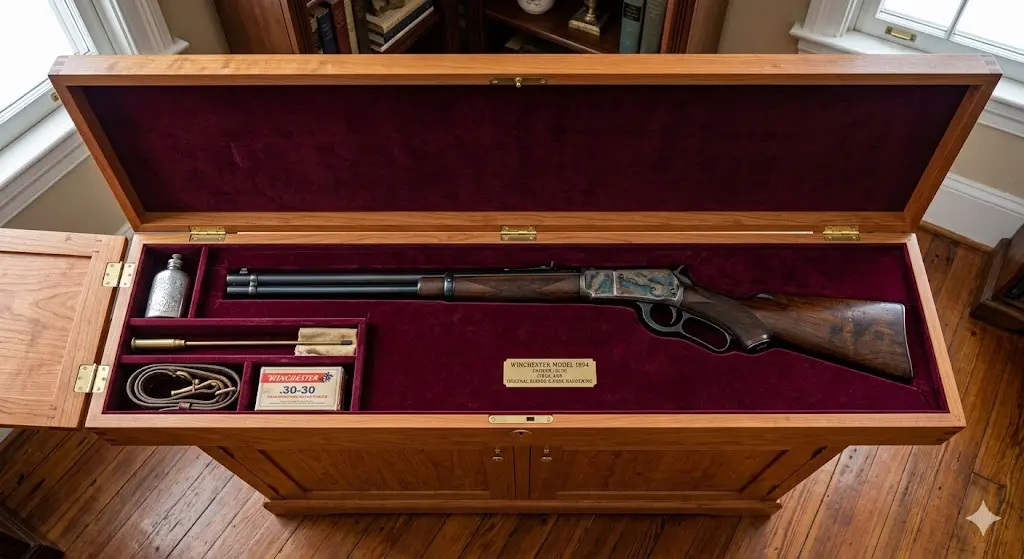
How to Protect Antique and Vintage Firearms in Wood Storage: What Collectors Need to Know About Climate and Finish
Key Takeaways Why Antique Firearms Demand a Different Standard of Storage Storing a modern production firearm and storing an 1860s
Read More
