03 Jul 2026 • Reading Time: 13 min
Key Takeaways
- Cherry, white oak, and hickory are not interchangeable choices with different colors. They are distinct wood species with meaningfully different grain character, hardness, finishing behavior, and aging trajectories that affect how the piece looks and lives over decades.
- Cherry is the traditional fine furniture choice: warm tone, consistent grain, and a natural color development over time (from pinkish-tan to rich reddish-brown) that makes the piece improve visually for years after purchase.
- White oak offers a more neutral, slightly gray-cool tone with a pronounced open grain and distinctive ray figure. It integrates naturally with contemporary, transitional, and Arts and Crafts-influenced interiors without the warmth that cherry brings.
- Hickory is the boldest choice: dramatic grain variation with the most visible contrast between light sapwood and dark heartwood, producing a piece that is visually distinctive and best suited to spaces that welcome natural character and individuality.
- The “right” choice is the one that looks correct in the specific room the cabinet will occupy. Each of these species is beautiful in the right context. None is universally superior.
- Understanding how these woods age, how they respond to light and humidity, and how they compare to other furniture already in the room is the framework that leads to a confident choice.
Why the Wood Choice Matters More Than It First Appears
When buyers begin the process of choosing a Custom Cabinet Security gun cabinet, the wood species question often gets treated as the last step: the color choice after the more structural decisions about size, configuration, and security features are made.
The experienced furniture buyer knows that the wood choice is actually among the most consequential decisions, because it determines not just how the piece looks when it arrives but how it looks in five years, in fifteen years, and in fifty years.
Different hardwoods age differently. They reflect light differently. They integrate with existing furniture and room palettes in ways that have nothing to do with preference and everything to do with how colors and surfaces interact. Getting this choice right produces a piece that feels like it belongs in its room as though it was always there. Getting it wrong produces a piece that looks slightly off in a way that is hard to name but impossible to ignore.
This post explains the specific visual, material, and aging characteristics of cherry, white oak, and hickory so that the choice is made from knowledge rather than from a general impression formed in a photograph.
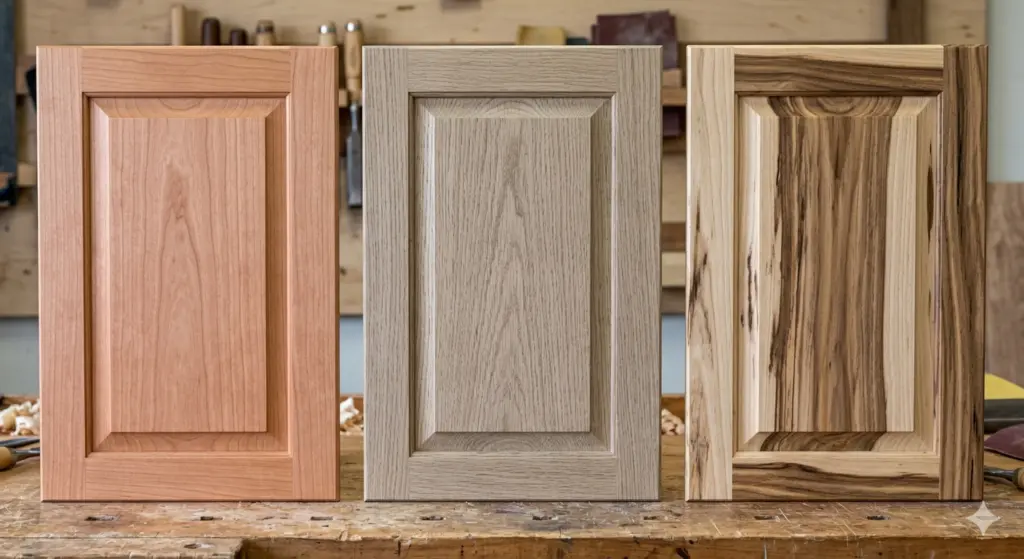
Cherry: The Classic Choice
Cherry has been the prestige cabinet-making hardwood in American furniture for centuries. The chest-on-frame furniture of the colonial period, the Shaker pieces of the 19th century, the formal dining room furniture of the early 20th century: cherry runs through all of it as the material of choice when the maker wanted warmth, refinement, and longevity.
Understanding why cherry has held this position for so long requires understanding what the material actually does.
The Visual Character of Cherry
Fresh-cut cherry has a pinkish-tan color that is somewhat understated on its own. It is easy to underestimate in a lumber yard or in a just-finished piece. The reason cherry holds the position it does in the furniture tradition is not what it looks like when it’s new.
It is what it becomes.
Cherry is photosensitive. Exposure to light, including ordinary ambient room light, causes a photochemical reaction in the wood fiber that progressively deepens the color. This process operates primarily in the first twelve to eighteen months after a piece is built and then slows but continues over the lifetime of the piece.
A cherry cabinet that was a warm tan when it arrived will be a distinctly richer color six months later. At two years, the change is dramatic. At ten years, a well-maintained cherry piece has a depth and warmth that cannot be replicated by staining a lighter species to match.
This aging behavior is considered a feature by buyers who understand it. The piece improves over time in ways no other species in the collection replicates.
The Grain Character of Cherry
Cherry has a fine, relatively consistent grain with minimal character variation in most boards. The grain runs straight or with a gentle wave, and the surface has a slight luster that responds well to hand-rubbed oil finishes.
This consistency is part of what makes cherry work in formal furniture contexts. The visual attention is on the form of the piece, not on the drama of the grain. Cherry does not compete with the room; it contributes to it.
Occasionally, cherry boards contain figure: curl, bird’s eye, or other optical patterns produced by growth irregularities. These boards are less common and add visual interest. In a gun cabinet, figured cherry panels on door fronts or drawer faces are a meaningful upgrade in visual character.
The Hardness and Workability of Cherry
Cherry has a Janka hardness rating of approximately 950 lbs/force, placing it in the moderate range among American hardwoods. It is harder than many softwoods used in furniture (pine, cedar) but softer than white oak and significantly softer than hickory.
This hardness level means cherry is very workable for hand tool operations: it cuts cleanly, chisels predictably, and holds joinery detail well. It also means it is somewhat more susceptible to dents from impact than the harder species, which is worth considering for a piece that will be placed in a room with significant foot traffic or that will be handled frequently.
What Room Settings Work Best With Cherry
Cherry’s warm, red-brown tone integrates naturally with:
Traditional and formal interiors: Mahogany, walnut, and dark-stained oak furniture. Cherry does not match these species but relates to them in tone in a way that feels harmonious rather than competing.
Rooms with warm paint colors: Cream, warm white, tan, terracotta, sage, and similar undertone-warm palettes work with cherry’s red undertone without creating a color conflict.
Traditional studies and libraries: Dark-stained built-in shelving, leather upholstery, and aged hardcovers are the natural companions of cherry furniture.
Bedrooms with classic or traditional character: Cherry connects to the furniture tradition that produced bedroom sets for the last two centuries and sits naturally in a room that follows that design language.
Where cherry is less natural: Very cool or modern interiors with gray walls, white oak or ash furniture, and minimal traditional detailing can create a color tension with cherry’s warmth that is difficult to resolve without the room feeling inconsistent.
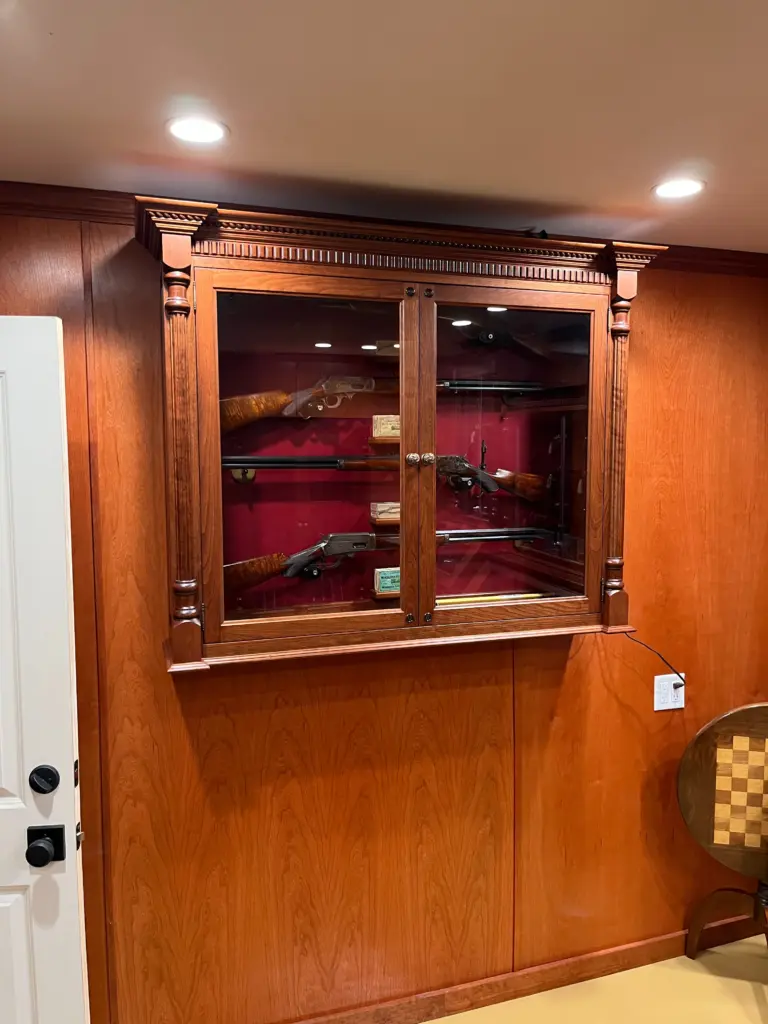
White Oak: The Versatile Contemporary Choice
White oak has experienced a significant rise in popularity over the last decade as contemporary and transitional interior design has moved toward the neutral, Scandinavian-influenced palettes that define much of current residential design. Where mahogany and cherry dominated 20th-century formal furniture, white oak is defining the aesthetic of early 21st-century residential work.
Understanding what white oak is and why it has this position requires looking at the material itself.
The Visual Character of White Oak
White oak has a more open, pronounced grain structure than cherry. The pores are larger and create a visible texture in the surface that reads as more rustic and natural than the smooth face of cherry.
The most distinctive visual feature of white oak is the ray figure that appears when the log is quartersawn (cut at a radial angle rather than flat-sawn). Quartersawn white oak shows medullary rays as flecks or ribbons of lighter, lustrous material running perpendicular to the grain direction. This figure is characteristic of quality traditional Arts and Crafts furniture and is a recognized feature of white oak that adds visual interest without the drama of highly figured exotic species.
The color of white oak is neutral to slightly gray-tan. It does not have the warm red undertone of cherry or the dramatic light-dark contrast of hickory. This neutrality is a practical advantage in a wide range of interior settings: white oak does not push a room toward warmth or coolness and integrates more easily with the full range of modern paint palettes.
How White Oak Ages
White oak does not undergo the dramatic photosensitive color change that cherry experiences. It grays and neutralizes slowly over time, moving toward a warm gray-tan that is consistent with how white oak patinates in traditional furniture contexts.
This aging pattern is lower-drama than cherry’s evolution. A white oak cabinet will look broadly similar in ten years to how it looks at delivery, with the surface developing a slightly richer depth and more mellow tone as the finish matures.
For buyers who want a piece that maintains a consistent relationship with its surroundings rather than evolving significantly over time, white oak’s stability is a practical advantage over cherry’s dramatic development.
The Hardness and Workability of White Oak
White oak has a Janka hardness rating of approximately 1,360 lbs/force, significantly harder than cherry. This hardness makes white oak more resistant to dents and surface damage from impact, which is a practical advantage for a piece that will be accessed frequently.
The harder surface also means that white oak shows wear more slowly than cherry. In a gun cabinet that is opened daily, white oak’s durability advantage is measurable over decades of use.
White oak is workable but more demanding than cherry. The harder material requires sharper tooling and more deliberate cutting to achieve clean results. The craftsmen in Arthur who work with it regularly have the experience to achieve the precision the material requires.
What Room Settings Work Best With White Oak
White oak’s neutral, gray-cool tone integrates naturally with:
Contemporary and transitional interiors: Gray, white, greige, and similar cool-neutral wall colors. White oak does not compete with the cool tones of modern paint palettes.
Scandinavian-influenced spaces: Clean lines, natural materials, minimal ornamentation, and light-toned palettes are the natural companions of white oak in the current design tradition.
Rooms with mixed-species furniture: Because white oak does not push strongly toward warmth or coolness, it integrates with a broader range of existing furniture without creating the color tension that a strongly warm species like cherry might introduce.
Modern farmhouse and industrial interiors: White oak’s open grain and natural character work with the exposed-material aesthetic of these styles without reading as traditional or formal.
Arts and Crafts influenced interiors: The quartersawn ray figure of white oak is historically and aesthetically connected to the Arts and Crafts tradition. A gun cabinet in white oak in a Mission or Craftsman-style room is a period-appropriate choice.
Where white oak is less natural: Very warm traditional interiors with a strong palette of reds, terracottas, and mahogany furniture may find white oak’s cooler tone introduces an unresolved color tension with the existing warmth.
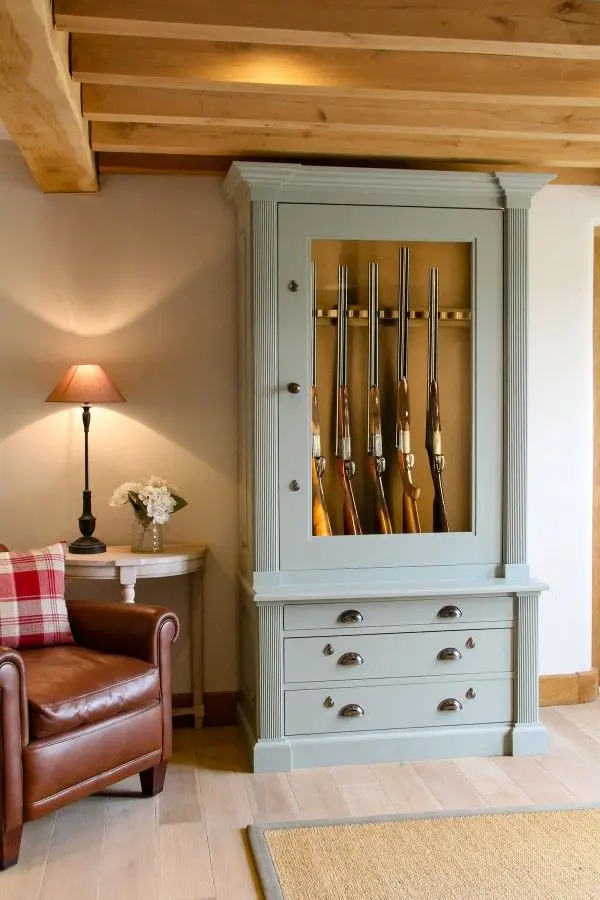
Hickory: The Character Choice
Hickory is the species for buyers who want the piece to make a statement. It is not subtle, and that is not a criticism. Hickory’s dramatic visual character is its defining quality, and in the right setting, it is exactly right.
The Visual Character of Hickory
The most striking feature of hickory is the dramatic contrast between the heartwood and sapwood within the same board. Hickory heartwood is reddish-brown to tan, while the sapwood is nearly white to cream. Boards that contain both can show color ranges from near-white to dark reddish-brown within a single panel.
This contrast creates visual drama that no other species available from Custom Cabinet Security replicates. A hickory cabinet panel does not have the visual consistency of cherry or the structured ray figure of white oak. It has the visual character of natural wood in its most expressive form: the marking of a specific tree, with its own pattern of growth.
Hickory also has a pronounced grain texture with a coarser surface than cherry, though not as coarse as white oak’s open pore structure. The surface has a natural, honest quality that reads as genuine material rather than the more refined presentation of cherry.
The Story of Hickory as an American Wood
Hickory is native to eastern North America and has a long history as a utilitarian hardwood: tool handles, wagon wheel spokes, baseball bats, and furniture in the American vernacular tradition. It is not a European import or an exotic species. It is a specifically American wood with a specifically American character.
For collectors whose aesthetic sensibility runs toward the natural, the rustic, or the American vernacular rather than the formal tradition, hickory’s material character resonates in a way that cherry and white oak do not.
How Hickory Ages
Hickory darkens somewhat over time, with the heartwood deepening toward a more uniform reddish-brown and the sapwood mellowing from white toward a warmer cream. The dramatic contrast between the two does not entirely disappear but becomes somewhat more harmonious as the piece ages.
The finish also develops depth over time in the same way that any hand-rubbed oil finish matures: the surface becomes richer and more three-dimensional in its reflection of light as the finish seasons.
The Hardness of Hickory
Hickory has a Janka hardness rating of approximately 1,820 lbs/force, making it significantly harder than both cherry and white oak. It is one of the hardest domestic hardwoods available in standard furniture production.
This hardness is a practical advantage in durability: hickory is extremely resistant to dents, dings, and surface damage. It is the most durable of the three species options for a piece that will be accessed frequently and that needs to maintain its surface quality over decades of daily use.
What Room Settings Work Best With Hickory
Hickory’s dramatic, natural character integrates most naturally with:
Rustic and lodge-style interiors: Stone fireplaces, exposed timber framing, leather and natural fiber upholstery, and similar elements that celebrate natural materials and textures.
Log homes and timber frame construction: The natural character of hickory relates to the material character of timber framing and log construction without the visual inconsistency that a refined formal species like cherry might introduce.
Western-influenced interiors: Ranch-style homes, mountain retreats, and spaces with a Western American aesthetic are natural settings for hickory’s vernacular American character.
Craftsman or Arts and Crafts interiors: While white oak is the traditional Arts and Crafts species, hickory’s bold natural grain also works within the materials-honest aesthetic of the Craftsman tradition.
Dedicated gun rooms: A room designed specifically as a display and storage space for a significant firearm collection can embrace hickory’s visual boldness as part of a room-defining statement about the collection and its owner.
Where hickory is less natural: Formal traditional interiors with fine furniture, painted surfaces, and a refined aesthetic may find hickory’s grain drama inconsistent with the visual register of the room. Very contemporary minimalist spaces may also find hickory’s natural variation too energetic for the calm palette the design requires.
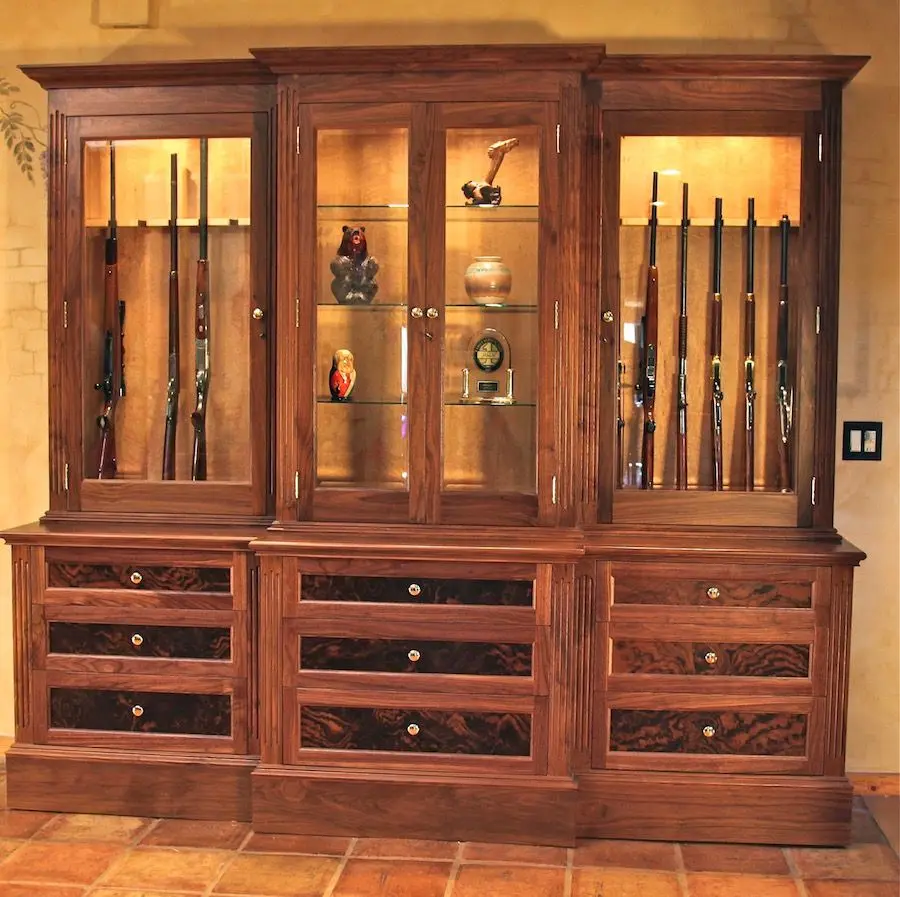
Making the Comparison: Side by Side
For buyers who want a direct reference, here is the comparison across the key decision dimensions.
Color at Time of Purchase
Cherry: Warm pinkish-tan, moderate warmth, relatively consistent across the surface.
White oak: Neutral gray-tan, slightly cool undertone, moderate texture from open grain pores.
Hickory: High contrast between near-white sapwood and reddish-brown heartwood, the most visually variable of the three.
Color at Five to Ten Years
Cherry: Significantly deepened to a rich reddish-brown, dramatically warmer than at purchase. The most dramatic change of the three species.
White oak: Gradual move toward warm gray, broadly similar to new with a deeper surface character. Low drama aging.
Hickory: Heartwood deepened somewhat, sapwood mellowed toward cream. Contrast somewhat reduced but still the most visually dramatic of the three.
Hardness (Practical Durability)
Cherry: Moderate (950 lbs/force Janka). Adequate for most settings, more susceptible to dents than the other two.
White oak: Hard (1,360 lbs/force). Good durability for frequently accessed pieces.
Hickory: Very hard (1,820 lbs/force). The most durable surface of the three. Best choice for pieces that will be accessed daily and where surface preservation over decades is a priority.
Grain Character
Cherry: Fine and consistent, low visual texture, reads as refined and formal.
White oak: Open grain with distinctive ray figure when quartersawn, moderate visual texture, reads as natural with traditional character.
Hickory: Bold contrast between heartwood and sapwood, high visual variation, reads as natural and rustic with strong individual character.
Interior Style Match
Cherry: Traditional, formal, warm-palette contemporary, library and study settings.
White oak: Contemporary, transitional, Scandinavian-influenced, Arts and Crafts, mixed-species rooms.
Hickory: Rustic, lodge, ranch, log home, Western-influenced, gun room, natural material spaces.
The Practical Decision: A Framework for Choosing
With the above information, most buyers can narrow their choice significantly by working through four practical questions.
Question 1: What does the existing furniture in the room look like?
If the room already has furniture, look at the dominant wood tones present. Warmer-toned woods (mahogany, stained oak, walnut) suggest cherry as the most harmonious choice. Cooler or more neutral wood tones (maple, lighter oak, painted furniture) suggest white oak. Natural, rustic, or mixed natural materials suggest hickory.
A gun cabinet does not need to match the existing furniture. But it should relate to it in a way that feels intentional rather than accidental.
Question 2: What are the wall and trim colors?
Warm paint colors (cream, warm white, tan, sage, terracotta) work with cherry’s warmth. Cool or neutral colors (gray, true white, greige, blue-gray) work with white oak’s neutrality. Natural material settings with stone, wood, or plaster finishes work with hickory’s character.
This is not a strict rule, but it is a reliable starting point. Color relationships between wall and furniture surfaces matter in ways that are immediately felt when they are wrong and invisible when they are right.
Question 3: How prominent will the cabinet be in the room?
A cabinet positioned as a focal piece in a room, centered on a wall or in an alcove, bears more visual scrutiny than one placed in a corner or a secondary position. A focal piece in a carefully designed room warrants the consistency and refinement of cherry or the structured character of white oak. A statement piece in a room that celebrates individuality warrants the drama of hickory.
Question 4: How do you want the piece to relate to its setting in twenty years?
Cherry will dominate the answer by then, having developed significantly toward a rich reddish-brown. If the room will remain broadly similar in color palette over that period, the evolved cherry tone needs to still work in it.
White oak will look broadly as it does today, with a deepened and mellowed quality that maintains the same relationship to its setting.
Hickory will have softened its contrast somewhat but will still read as bold and distinctly individual.
The Option of Seeing Samples Before Deciding
If the description above has narrowed the choice but not resolved it, seeing physical samples of the three species under the actual lighting conditions of the room where the cabinet will be placed is the most reliable path to confidence.
Contact Custom Cabinet Security to discuss whether sample material is available to assist with the selection process. A sample piece viewed under incandescent light in a warm-palette traditional room looks different from the same sample viewed under LED recessed lighting in a contemporary gray interior, and that difference is exactly the information that resolves the remaining uncertainty.
The consultation process is the right context for this conversation, along with any other design questions that would benefit from the specific knowledge of the craftsmen who will build the piece.
The current collection of available pieces shows each species in finished form and in the context of specific cabinet configurations, which provides additional reference for how each species presents in a completed gun cabinet rather than a raw board.
The Bottom Line
Cherry, white oak, and hickory are all excellent choices for a Custom Cabinet Security gun cabinet. They are not excellent in the same ways, and the choice between them is not a matter of which is best in the abstract.
Cherry is the right choice for buyers who want a piece that warms a traditional setting, develops remarkable depth over time, and relates to the long history of American fine furniture in the most direct way.
White oak is the right choice for buyers who want a piece that integrates with contemporary or transitional interiors, maintains a consistent tone over time, and offers the hardness advantages of a denser species.
Hickory is the right choice for buyers who want a piece with the most natural character, the most visual drama, and the most distinctly American material identity, in a setting that welcomes that kind of presence.
Each choice produces a piece that, in its right context, is exactly right. The work of the craftsmen in Arthur is consistent across all three species. The material they start with determines the character of what arrives.
Choose the material that fits the room and the person who will own the piece, and the craftsmen will do the rest.
Related Posts
View All
Uncategorized
Reading Time: 8 min
The Resale Value of a Custom Gun Cabinet: Does a Handcrafted Amish Safe Hold Its Value Over Time?
If you’ve ever bought a mass-produced gun safe from a big-box retailer, you already know what happens the moment it
Read More
Uncategorized
Reading Time: 11 min
Women Gun Owners: How to Choose a Gun Storage Solution That Fits Your Home’s Style Without Compromise
Key Takeaways The Storage Problem Nobody Talks About Walk into almost any sporting goods store and look at the gun
Read More
Uncategorized
Reading Time: 10 min
How to Protect Antique and Vintage Firearms in Wood Storage: What Collectors Need to Know About Climate and Finish
Key Takeaways Why Antique Firearms Demand a Different Standard of Storage Storing a modern production firearm and storing an 1860s
Read More
