12 Jun 2026 • Reading Time: 12 min
Key Takeaways
- Custom Amish gun cabinets from Custom Cabinet Security range from approximately $1,500 to $6,000 or more, depending on the size of the collection, the wood species selected, the interior configuration, and the security features included.
- Pistol chests, which are smaller pieces focused on organized handgun storage, typically fall in the lower portion of this range. Large display cabinets for significant long gun collections sit at the upper end.
- Wood species is one of the most significant price variables: cherry wood commands a premium over white oak, and hickory falls between the two depending on grain character and figure.
- The cost of a custom Amish gun cabinet includes security features that factory-produced alternatives often charge separately for or do not offer at all: steel-reinforced locking bars, pick-resistant high-security locks, bulletproof glass panels, and integrated dehumidifier systems.
- The comparison to factory-produced steel safes is not straightforward, because these are different product categories serving different buyers. The relevant comparison for most Custom Cabinet Security buyers is to other premium wood gun storage, not to entry-level steel safes.
- A quality custom Amish gun cabinet is a one-time purchase designed to last generations. The lifetime cost comparison between a 50-year cabinet and a factory safe replaced or refurbished multiple times over the same period is closer than the upfront price difference suggests.
Why Pricing Custom Amish Gun Cabinets Is Different From Pricing Most Products
If you search for the price of an asphalt shingle or a mid-range steel gun safe, you’ll find relatively consistent numbers across multiple sources. The products are standardized. The variables are limited.
Pricing a custom Amish gun cabinet is different because the product is not standardized. Each cabinet is built to a specific configuration: a particular wood species, a specific interior layout for a specific collection, a defined set of security features, and dimensions that reflect what the buyer actually needs rather than what a production line can manufacture efficiently.
The pricing for custom work in fine woodworking is not mysterious, but it does require understanding what drives the variation. This post provides an honest breakdown of those variables, with real price ranges based on the types of pieces built by the craftsmen in Arthur, Illinois.
One upfront note: this post provides representative ranges based on general market knowledge for custom Amish-built gun cabinets of the type and quality produced by Custom Cabinet Security. For a precise quote on your specific configuration, a direct consultation is the right starting point. The goal of this post is to give you a realistic frame of reference before that conversation begins.
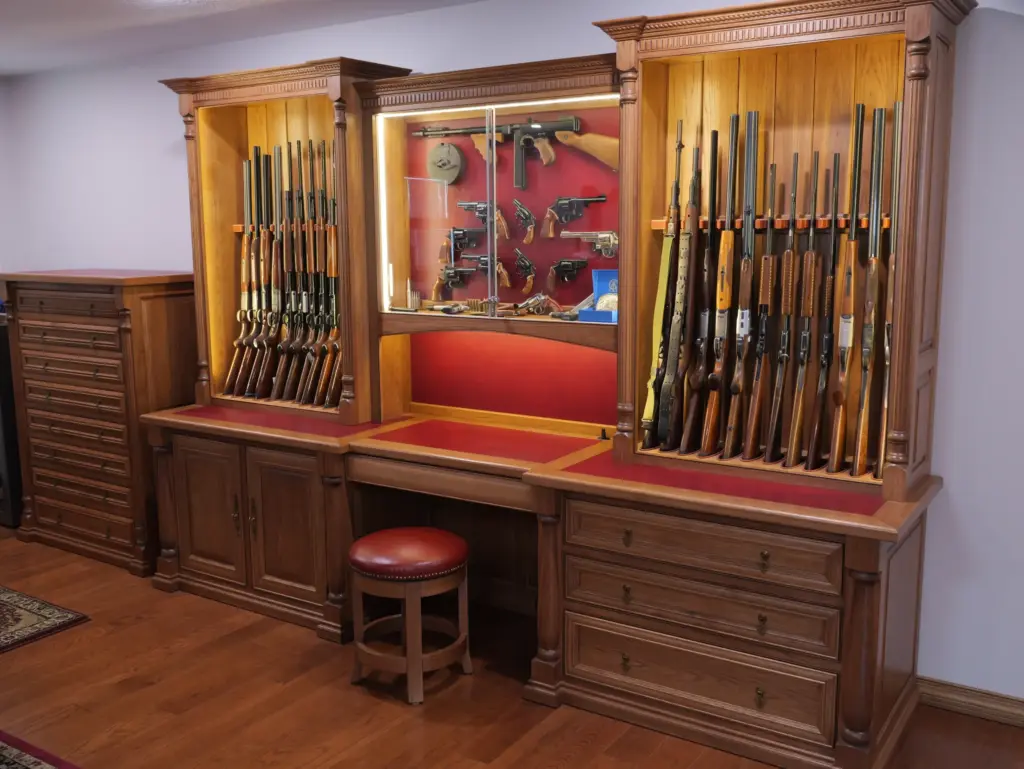
The Core Variables That Drive Price
Before getting into specific ranges, understanding the four primary variables that determine the price of any custom Amish gun cabinet makes the numbers easier to interpret.
Variable 1: Cabinet Size and Capacity
The most direct driver of price is the size of the piece. A small pistol chest holds five to eight handguns and fits comfortably on a dresser. A large display cabinet holds twenty-plus long guns in a piece that commands a wall.
The difference in material quantity, labor hours, and complexity between these two extremes is substantial. More material means higher material cost. More surface area means more finishing time. A taller, more complex piece requires more precise joinery and more time from the craftsman.
Size is almost always correlated with capacity: more guns means a larger cabinet, which means more cost.
Variable 2: Wood Species
Custom Cabinet Security builds in cherry wood, hickory, and white oak. Each has different material costs, different workability characteristics, and different finishing requirements.
Cherry wood is one of the most prized American cabinet-making hardwoods. It has a relatively consistent grain structure that finishes beautifully, and it deepens to a rich reddish-brown over time. Cherry commands a material premium over the other available species.
White oak has an open, pronounced grain with distinctive ray figure. It finishes well and its neutral, slightly grayish tone works with contemporary and transitional interiors. White oak falls in the mid-range of the three species.
Hickory is harder than both cherry and oak, with dramatic grain variation and character. It is the most visually distinctive of the three species. Hickory’s density makes it slightly more challenging to work, which can affect labor cost modestly.
The price differential between species is real but not the dominant factor in the overall cost. A small cherry cabinet does not cost more than a large hickory cabinet simply because cherry commands more per board foot.
Variable 3: Interior Configuration
The interior of a gun cabinet does active work: holding guns securely, protecting finishes, organizing the collection. The complexity of that configuration affects both material cost and labor time.
A simple cabinet interior with basic rifle rests and standard felt lining is straightforward to build. A complex interior with individually fitted compartments for each pistol in a chest, custom-depth drawers, specialized display trays, and integrated dehumidifier placement is a more involved project.
Interior configuration also includes the number and type of drawers (each drawer represents material cost and joinery work), the presence of loft sections or secondary compartments, and whether any custom fitting for specific firearms is part of the design.
Variable 4: Security Features and Glass
The security hardware in a Custom Cabinet Security piece is not an afterthought. The steel-reinforced locking bar, pick-resistant lock cylinder, and bulletproof glass panels in display configurations are integrated into the design and contribute to both the material cost and the construction complexity of the piece.
A display cabinet with bulletproof glass panels costs more than an equivalent cabinet with solid wood door panels, because the glass itself carries a material premium and the installation requires specific construction around the glass edges.
The dehumidifier, while not expensive in absolute terms, is also a cost component that should be understood as standard rather than extra: it protects the investment the cabinet is designed to house.
Pricing by Product Category
With those variables established, here are representative price ranges for the main categories of pieces produced by Custom Cabinet Security.
Pistol Chests
Representative range: $1,500 to $2,800
A pistol chest is a smaller piece focused on organized handgun storage in fitted drawers. The 8-drawer configurations in cherry or hickory represent the high end of this category, while smaller drawer configurations or simpler interiors fall lower in the range.
What drives price within this category:
- Number of drawers (more drawers, more joinery work)
- Drawer depth and custom fitting for specific handgun types
- Wood species (cherry at the higher end, hickory and white oak below)
- Any special hardware or lock upgrades
Who this range is for: Collectors with a handgun-focused collection who want organized, secure, furniture-quality storage. The pistol chest format is also appropriate for collectors who want to display a primary long gun collection in a separate cabinet while keeping handguns in an organized, private chest.
See the pistol chest options available in the current collection for specific pieces in this category.
Pistol Display Cabinets
Representative range: $2,000 to $3,500
A pistol display cabinet combines organized handgun storage with the glass-panel display format that allows the collection to be seen without opening the piece. The 14-gun configuration represents a standard in this category.
What drives price within this category:
- Number of guns accommodated and corresponding cabinet size
- Glass type and panel configuration (bulletproof glass is a premium over standard glass)
- Wood species
- Interior lighting (LED touch-control lighting adds to the cost modestly)
Who this range is for: Handgun collectors who want both security and visibility, or collectors whose handguns include pieces with decorative or historical significance that merit display.
Long Gun Display and Collection Cabinets
Representative range: $2,500 to $5,500
This is the widest category, encompassing everything from a modest display cabinet for a rifle collection of eight to twelve guns to a large statement piece for a collection of twenty-plus long guns with integrated handgun storage and multiple display sections.
What drives price within this category:
- Total capacity (the most significant variable in this range)
- Display configuration complexity (multiple sections, integrated pistol storage, loft areas)
- Glass panel configuration and bulletproof glass specification
- Wood species
- Interior customization (specialized rests, integrated document storage, custom compartments)
Who this range is for: Serious rifle and long gun collectors who want a display and storage piece that reflects the quality of what it houses and functions as a significant piece of furniture in the room it occupies.
Custom Builds Beyond Standard Configurations
Representative range: $4,000 to $7,000+
For buyers whose specific collection and space requirements go beyond what the standard configurations address, Custom Cabinet Security builds entirely custom pieces. These might involve:
- Non-standard dimensions to fit a specific wall space
- Combined pistol chest and display cabinet as a single integrated unit
- Capacity requirements beyond standard configurations
- Unusual wood choices or finish specifications
- Specialized interior fitting for a defined collection with specific pieces
The pricing for fully custom work reflects the additional design time, the unique material procurement, and the craftsmanship involved in building a one-of-a-kind piece. The custom consultation process is the starting point for these projects.
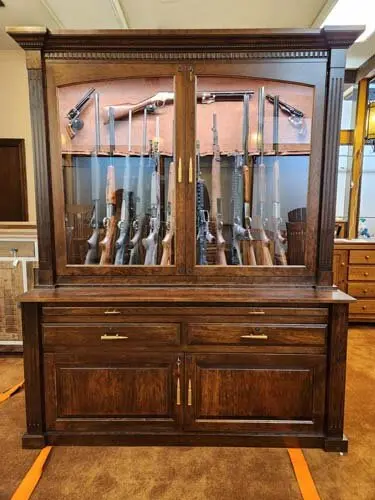
What the Price Includes That Factory Alternatives Do Not
Understanding what the price includes is as important as understanding the price itself, particularly when comparing a custom Amish cabinet to alternatives in the market.
Solid Hardwood Construction Throughout
Factory gun furniture at lower price points uses MDF (medium-density fiberboard) wrapped in veneer for visible surfaces and constructed areas. MDF is an engineered wood product that does not hold joinery as well as solid hardwood over time, responds poorly to humidity variation, and cannot be refinished if the surface is damaged.
Custom Cabinet Security uses solid hardwood throughout the structural and visible portions of every piece. The frames, panels, drawer boxes, shelving, and trim are solid cherry, hickory, or white oak, not veneer-over-MDF or plywood simulations.
This is not merely an aesthetic distinction. It is a structural and longevity distinction. Solid hardwood with traditional joinery is what makes a furniture piece heirloom-quality. Engineered wood products with mechanical fasteners are what makes a furniture piece adequate for its current purpose.
Traditional Joinery That Does Not Rely on Fasteners Alone
Dovetail joints in drawer boxes. Mortise and tenon construction in frames. Frame-and-panel construction that allows wood movement without stress. These are joinery traditions that produce furniture lasting generations, not decades.
Factory furniture is assembled with mechanical fasteners (staples, screws, nails) into engineered panel products. The joints loosen over time. The panels can swell and delaminate. The furniture works for its initial purpose and then gradually works less well.
A pistol chest with dovetailed drawers opening and closing smoothly after thirty years is not unusual in quality furniture. A factory-assembled equivalent with stapled MDF drawer boxes will not match that durability.
Integrated Security Features
The steel-reinforced locking bar, pick-resistant lock cylinder, and (in display pieces) bulletproof glass panels are not separately priced line items in a Custom Cabinet Security quote. They are part of what a properly constructed piece from this craftsman looks like.
On factory gun furniture at lower price points, a steel-reinforced locking system is sometimes absent (a basic keyed lock on a wood cabinet), or a glass panel is standard float glass rather than rated safety or bullet-resistant material.
The Golden Rod Dehumidifier
A dehumidifier integrated into the cabinet design as a standard element is not standard on most factory gun furniture. It is standard on every piece from Custom Cabinet Security. The dehumidifier protects the collection from the slow corrosion and wood damage that humidity variation causes in a closed storage environment.
Warranty and Workmanship Standing
A large manufacturer’s warranty is a corporate process. A craftsman’s warranty in a small workshop where every piece is built by identifiable people is a personal accountability relationship. The craftsmen in Arthur, Illinois build their reputation one piece at a time in a community where that reputation is their professional identity.
The Comparison That Actually Makes Sense
The most common pricing comparison that potential buyers make is between a Custom Cabinet Security cabinet and a steel gun safe at a similar nominal capacity. This comparison is worth examining carefully because it is often misleading.
Why the Steel Safe Comparison Understates the Cabinet’s Value
A factory steel safe at $800 to $1,500 and a custom Amish gun cabinet at $2,500 to $4,000 do not occupy the same product category, even though both can hold a similar number of firearms.
The steel safe is a security device. Its design priority is maximum resistance to unauthorized access. Its interior is utilitarian (MDF shelving, carpet, foam barrel rests). Its exterior is painted steel. It will be stored in a closet, a corner, or a utility room, because putting it in a living space would make the space look like an armory.
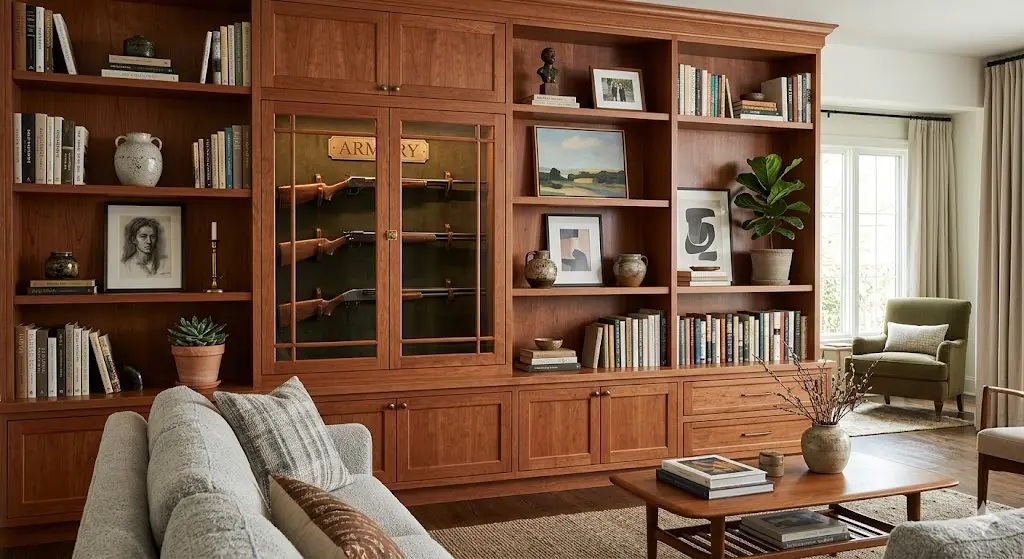
The custom cabinet is furniture. Its design priority is the combination of security, craftsmanship, and aesthetic integration. It belongs in a study, a library, or a living room. Its presence communicates something about the collection and its owner. It will still be performing its function and looking appropriate in its space in fifty years.
These are not competing products for the same buyer. A buyer who wants maximum forced-entry resistance above everything else should buy a high-quality steel safe. A buyer who wants furniture-quality storage and display for a collection they’ve invested years and significant money in should buy a quality wood cabinet.
The buyers who most commonly end up with both are right: a display cabinet for the working and display collection, and a steel safe for maximum-security storage of the highest-value pieces.
The Lifetime Cost Comparison
A factory steel safe with MDF interior components and vinyl surfaces will show meaningful wear within fifteen to twenty years. The interior materials degrade. Electronic keypad locks develop reliability issues. The exterior finish chips and corrodes in utility storage conditions.
Replacing or refurbishing a steel safe at year fifteen means spending again on the storage solution.
A solid hardwood cabinet with traditional joinery, hand-applied finish, and quality lock hardware does not follow this trajectory. The piece that exists at purchase is the piece that will be in use in thirty or fifty years, possibly by a different generation of the same family.
Over a forty-year period, the lifetime cost of a single custom cabinet purchase versus one or two factory safe replacements or refurbishments is closer than the upfront price comparison suggests.
How to Budget for Your Specific Project
For buyers working through a purchasing decision, here is a practical approach to budgeting for a custom Amish gun cabinet.
Step 1: Define the Collection
How many long guns? How many handguns? Are any of the pieces unusually long or unusually short? Are there pieces with specific display priority (historically significant firearms, custom engraved pieces, heirloom guns) that deserve more prominent placement?
The collection defines the capacity, and capacity is the most significant driver of size and therefore price.
Step 2: Define the Room
Where will this piece live? What is the wall space available? What is the general aesthetic of the room, and which wood species would integrate most naturally? Is display a priority (glass-panel cabinet) or is private, organized storage the goal (solid door cabinet or chest format)?
The room context affects format choice and potentially size, which affects price.
Step 3: Identify the Security Priorities
Is this a primary residence with children who will have access to the space? A private room or dedicated gun room with controlled access? The security requirements that matter for your specific household affect feature choices and, modestly, price.
Step 4: Set a Realistic Budget Range
Based on the sizing and format guidance above:
- Pistol chest or small display piece: plan for $1,500 to $2,800
- Mid-size long gun display cabinet or pistol display cabinet: plan for $2,500 to $4,000
- Large collection cabinet or integrated multi-format piece: plan for $4,000 to $6,000+
If your project falls in a higher range than expected, discussing which elements can be adjusted within the consultation process often reveals paths to the right piece within a defined budget.
Step 5: Start the Conversation
A custom piece requires a conversation. The range provided in this post is a framework, not a firm quote. The craftsmen who will actually build the piece need to understand the specific collection, the intended location, and the design priorities to provide accurate pricing.
The consultation process at Custom Cabinet Security is the right starting point. It costs nothing to begin that conversation, and it will result in a quote specific to your situation rather than a range applicable to any buyer.
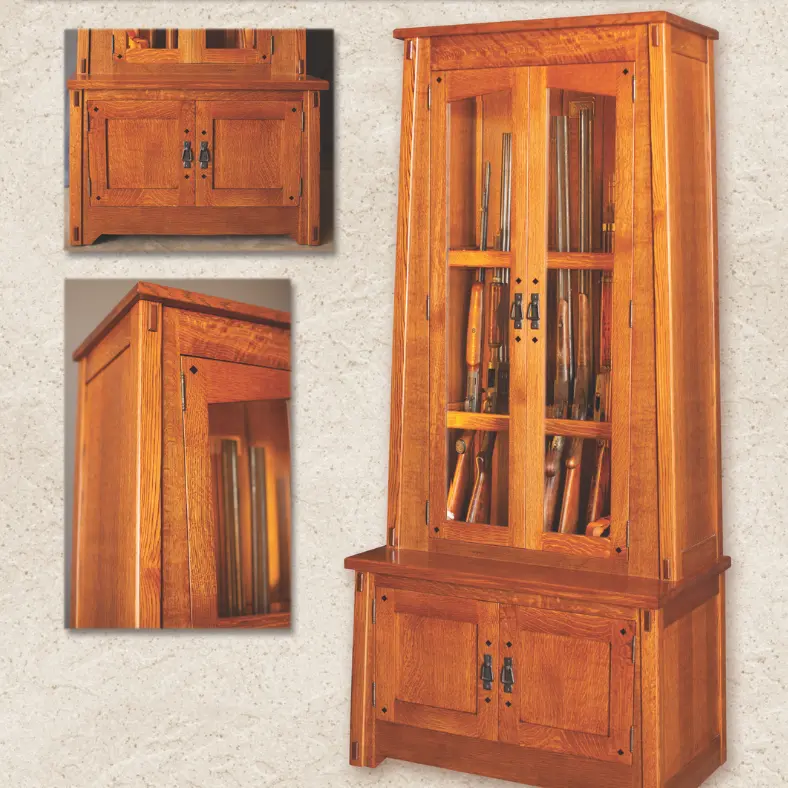
Common Questions About Custom Cabinet Pricing
Does the price include shipping or delivery? Shipping and delivery costs are separate from the cabinet price and depend on the delivery location. Custom Cabinet Security ships to buyers across the country; the delivery cost reflects the distance and the specific logistics of the piece. This is confirmed during the consultation process before any purchase decision is made.
Is there a payment plan or financing option? Payment and financing terms are best addressed directly during the consultation process. Custom work typically requires a deposit before production begins, with the balance due at delivery.
How long does production take once an order is placed? Custom builds take longer than pulling an item from warehouse inventory. A realistic expectation for a custom piece from initial order to delivery is several weeks to a few months depending on current production schedule and the complexity of the piece. The consultation process will include a realistic timeline estimate.
Can I modify a standard design to fit my specific needs? Yes. The consultation process is specifically designed to accommodate modifications to standard designs, whether that means adjusting dimensions, changing the interior configuration, selecting different hardware, or combining elements from different standard designs.
Is the price different for the same piece in different wood species? Yes, modestly. Cherry carries a material premium over white oak and hickory. The difference is real but not the dominant factor in overall pricing.
The Bottom Line
A custom Amish gun cabinet from Custom Cabinet Security is a meaningful investment, priced accordingly for what it is: a handcrafted solid hardwood piece built by skilled craftsmen in a tradition of quality that produces furniture lasting generations.
The price range across the product line is approximately $1,500 for a modest pistol chest to $5,500 or more for a large, fully featured display cabinet for a significant collection. Custom builds for buyers with specific requirements sit at the upper end of this range and beyond.
What that price includes is equally important: solid hardwood throughout, traditional joinery that outlasts mechanical fastener assembly, integrated steel-reinforced security, pick-resistant lock hardware, and a quality standard set by craftsmen who build their reputation one piece at a time.
The comparison to a factory steel safe is worth making clearly: these are different products for different buyers with different priorities. For the collector who wants display-quality storage that integrates into a home and is worth passing to the next generation, a custom Amish gun cabinet is not competing with a steel safe. It is in a category of its own.
The right starting point for any specific piece is a direct conversation. Reach out to begin a consultation and get pricing specific to your collection, your space, and your priorities.
Related Posts
View All
Uncategorized
Reading Time: 8 min
The Resale Value of a Custom Gun Cabinet: Does a Handcrafted Amish Safe Hold Its Value Over Time?
If you’ve ever bought a mass-produced gun safe from a big-box retailer, you already know what happens the moment it
Read More
Uncategorized
Reading Time: 11 min
Women Gun Owners: How to Choose a Gun Storage Solution That Fits Your Home’s Style Without Compromise
Key Takeaways The Storage Problem Nobody Talks About Walk into almost any sporting goods store and look at the gun
Read More
Uncategorized
Reading Time: 10 min
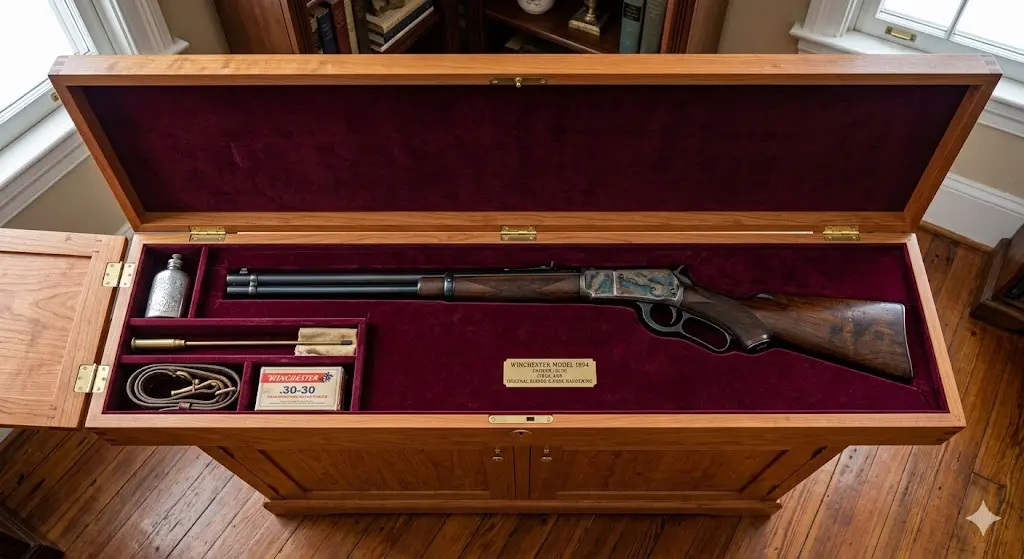
How to Protect Antique and Vintage Firearms in Wood Storage: What Collectors Need to Know About Climate and Finish
Key Takeaways Why Antique Firearms Demand a Different Standard of Storage Storing a modern production firearm and storing an 1860s
Read More
